If you've ever watched a Brazilian jiu-jitsu (BJJ) class and thought, is jiu jitsu a good workout? — the short answer is a resounding yes. But the longer answer is far more interesting.
Brazilian jiu-jitsu is one of the most physically demanding martial arts on the planet. It's a full-body workout that builds strength, burns calories, improves cardiovascular fitness, and transforms your body in ways that traditional gym routines simply can't match. But what makes jiu jitsu such an effective workout isn't just the physical intensity — it's the mental engagement, the problem-solving, and the community that keeps you coming back week after week.
Whether you're in Waynesboro, Charlottesville, Fishersville, or anywhere else in the Shenandoah Valley, BJJ offers a fitness experience that goes far beyond lifting weights or running on a treadmill. In this guide, we'll break down exactly why jiu jitsu is an incredible workout — covering calories burned, muscle groups worked, cardio benefits, body transformation, and the mental health advantages that make it one of the most rewarding fitness choices you can make.
Is Jiu Jitsu a Good Workout? Here's What the Science Says
Let's start with the question everyone asks: is jiu jitsu a good workout? The research and the lived experience of thousands of practitioners say absolutely — and the data backs it up.
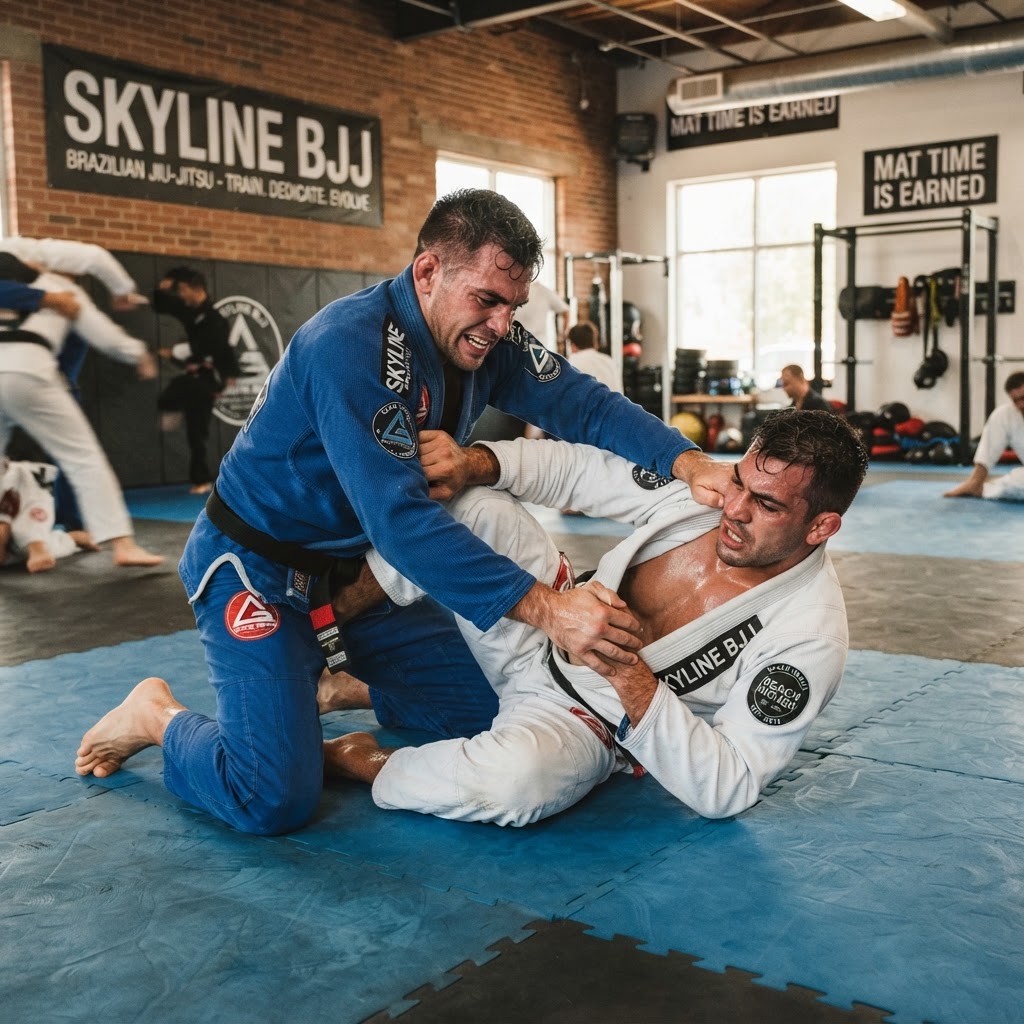
A typical 60-minute BJJ training session — which includes warm-ups, drilling techniques, and live sparring (rolling) — can burn anywhere from 500 to 1,000 calories depending on your body weight, intensity level, and experience. That's comparable to high-intensity interval training (HIIT) or a vigorous game of basketball. The difference? BJJ keeps your brain so engaged with technique and strategy that you often don't realize how hard your body is working until the round is over.
A 2023–2024 survey of adult BJJ practitioners found that 96.9% reported improved mood, 87.5% reported reduced anxiety, and 87.6% reported increased confidence after consistent training. So jiu jitsu doesn't just work your body — it measurably improves your mental wellbeing at the same time.
For those exploring Brazilian jiu-jitsu for weight loss, the calorie-burning potential of a single class is impressive. But the real magic happens when you train consistently. The compound movements, resistance from your training partner, and sustained heart rate create a metabolic effect that continues burning calories even after you leave the mats.
The Full-Body Benefits of BJJ: Every Muscle Group Gets Worked
One of the biggest BJJ fitness benefits is that it's a genuine full-body workout. Unlike isolation exercises at the gym, jiu jitsu forces your body to work as an integrated unit. Here's how different muscle groups get trained during a single session:
Core and Abs
Your core is the engine of jiu jitsu. Every sweep, escape, guard pass, and submission requires significant core strength and stability. The rotational forces involved in techniques like armbars and triangles build deep abdominal strength that crunches simply can't replicate. Most practitioners notice a tighter, stronger core within the first few months of training.
Upper Body
Gripping the gi, controlling your opponent's posture, and fighting for underhooks all build serious grip strength, forearm endurance, and back development. Your shoulders and arms get an incredible workout during drilling and rolling — especially when you're working from bottom positions where pushing and framing are constant.
Lower Body and Legs
Sprawls, knee cuts, guard retention, and standing passes all demand explosive leg power. Triangle chokes and leg locks build hamstring and hip mobility. Even the simple act of shrimping across the mats develops functional leg strength that translates directly to better movement on and off the mats.
Back and Posterior Chain
If you sit at a desk all day — and many adults here in Waynesboro and the Shenandoah Valley do — BJJ's pulling motions and bridging movements counteract that forward-hunched posture. The posterior chain activation during rolling helps strengthen your lower back, glutes, and hamstrings, improving posture and reducing back pain over time.
BJJ as a Cardio Workout: Building an Engine That Lasts
If you're looking for a BJJ cardio workout, you're in for a surprise. Many people assume jiu jitsu is purely technical — slow, methodical, chess-like. And while the top-level game can look that way, the reality of live sparring is anything but.
A 5-minute roll can spike your heart rate to 150–180 bpm, which puts you firmly in the vigorous aerobic and even anaerobic training zones. This interval-style cardiovascular work — bursts of intense effort followed by brief periods of positioning and recovery — mirrors the structure of HIIT training, which is widely considered one of the most effective ways to improve cardiovascular fitness.
The beauty of BJJ cardio is that it's incidental. You don't need to convince yourself to run intervals or do burpees. You're too focused on not getting submitted to notice that your heart is working overtime. This is what makes jiu jitsu such a sustainable workout — the fitness is a byproduct of the fun.
Over time, practitioners build what the BJJ community calls a mat engine — the cardiovascular endurance specific to grappling. You'll find yourself less winded, recovering faster between rounds, and — perhaps surprisingly — performing better in other physical activities too.
Jiu Jitsu Body Transformation: What to Expect
The jiu jitsu body transformation is real, and it looks different for everyone. Here's what you can realistically expect when you start training consistently:
First Month: The Shock Phase
Expect soreness in muscles you didn't know you had. Your body is adapting to entirely new movement patterns. You'll likely notice improved sleep — BJJ physically exhausts the body and reduces mental clutter, leading to deeper, more restful rest. For tips on getting through this phase, check out our guide on surviving your first month of BJJ.
Months 2–3: Visible Changes
This is where the body transformation starts to show. Many practitioners report noticeable fat loss, especially around the midsection. Your forearms will look more defined from gripping. Your posture improves. You may drop a clothing size without consciously changing your diet — though the increased activity often motivates better eating habits naturally.
Months 3–6: The Recomposition
By now, your body has adapted to the demands of training. You're building functional lean muscle while continuing to burn fat. The result is a body recomposition — you may not see the scale move dramatically, but your body composition shifts noticeably. Clothes fit differently. You feel stronger and more mobile in everyday life.
Long-Term: The Jiu Jitsu Physique
Experienced practitioners develop what's often called the jiu jitsu physique — lean, functional, and athletic. It's not the bodybuilder look. It's the body of someone who uses their muscles for a purpose: strong grip, powerful core, mobile hips, and the endurance to go hard for extended periods.
Brazilian Jiu Jitsu for Confidence: The Mental Workout
While the physical benefits are impressive, many practitioners will tell you that the real transformation happens in the mind. Brazilian jiu jitsu for confidence is one of the most powerful and well-documented benefits of the art.
BJJ places you in physically uncomfortable situations regularly. You'll be pinned, crushed, and submitted — and you'll learn to stay calm, think clearly, and work your way out. This process, repeated hundreds of times, builds a deep, unshakeable confidence that extends far beyond the mats.
You walk into a room differently when you know you can defend yourself. You handle workplace stress better when you've spent hours learning to stay composed under physical pressure. You approach challenges with a problem-solving mindset because that's exactly what BJJ trains you to do.
READY TO TRY BRAZILIAN JIU-JITSU?
Claim a FREE trial class at Skyline Jiu-Jitsu today!
Serving Waynesboro, Charlottesville, Fishersville & the Shenandoah Valley
This is why so many adults in Waynesboro, Charlottesville, and across the Shenandoah Valley are drawn to jiu jitsu. It's not just about fitness — it's about becoming a more confident, resilient version of yourself. For a deeper dive into this topic, read our post on BJJ mental health benefits for stress and confidence.
How BJJ Compares to Other Workouts
Let's be honest — there are plenty of ways to get fit. So why choose jiu jitsu over a gym membership, CrossFit, or running? Here's how BJJ stacks up:
BJJ vs. Traditional Weightlifting
Weightlifting builds raw strength, but it's isolated and repetitive. BJJ builds functional strength — the kind you can actually use. You'll develop grip strength, core stability, and body awareness that weights alone can't provide. Many lifters who try BJJ report being humbled by how quickly they gas out, despite being strong.
BJJ vs. Running or Cycling
Running is excellent cardio, but it's linear and repetitive. BJJ works your cardiovascular system in multi-planar, unpredictable ways. You're moving in all directions, reacting to an opponent, and problem-solving at high heart rates. It's simply more engaging — and for many, far more sustainable.
BJJ vs. HIIT Classes
HIIT gives you a great calorie burn in a short time, but it can become monotonous. BJJ gives you similar high-intensity intervals, but wrapped in a skill you're constantly improving. There's always a new technique to learn, a new problem to solve, and a new belt level to pursue. It never gets boring.
BJJ vs.CrossFit
CrossFit and BJJ share a community ethos, but BJJ's skill progression is more tangible. You can literally measure your improvement through belt promotions, competition results, and your ability to handle increasingly skilled training partners. CrossFit measures fitness; BJJ builds both fitness and a martial art.
Weight Loss on the Mats: How BJJ Burns Fat
If weight loss is your goal, the question is jiu jitsu a good workout? becomes even more important. The answer is a clear yes — and here's why:
A single BJJ class can burn 500–1,000 calories. Train 3–4 times per week, and you're adding 1,500–4,000 calories of additional energy expenditure to your week. Combined with even modest dietary adjustments, this creates the caloric deficit needed for consistent fat loss.
But BJJ offers something traditional cardio doesn't: muscle preservation. The resistance work inherent in grappling — pushing against an opponent's body weight, holding positions, fighting for control — stimulates muscle growth and retention. This means you lose fat, not muscle, which is critical for long-term metabolic health.
For a comprehensive look at this topic, including specific calorie estimates and weight loss strategies for BJJ practitioners, see our detailed guide on Brazilian jiu-jitsu for weight loss.
Stress Relief and Mental Health: The Hidden Fitness Benefit
Physical fitness isn't just about how your body looks — it's about how your body and mind function together. BJJ is uniquely powerful for stress relief and mental health, as we've explored in our posts on BJJ for anxiety and BJJ mental health benefits.
When you're on the mats, you can't think about anything else. The demands of live sparring force you into a state of flow — full presence, complete focus. This mental break from daily stressors is therapeutic in itself. Then there's the community: the friendships, the shared struggles, the support system that develops naturally from training together.
For adults dealing with anxiety, depression, or chronic stress — and that's many of us — BJJ offers something therapy and medication alone can't: a physical, social, and skill-based outlet that builds resilience through direct experience.
Training in the Shenandoah Valley: Your Local BJJ Fitness Community
If you're in Waynesboro, Charlottesville, Fishersville, Staunton, or anywhere in the Shenandoah Valley, you have access to high-quality Brazilian jiu-jitsu training right in your community. Skyline Jiu-Jitsu offers classes for all levels — from total beginners to experienced grapplers — in a supportive, progress-focused environment.
Training locally means you build relationships with people in your community. Your training partners become your friends, your accountability system, and your support network. This social aspect is a huge part of what makes BJJ a sustainable fitness practice — you're not just working out, you're becoming part of something.
To learn more about why Skyline Jiu-Jitsu is the right choice for martial arts in the Shenandoah Valley, check out our post on Waynesboro martial arts and why BJJ stands out among other options.
Getting Started: What to Expect at Your First Class
The best way to answer is jiu jitsu a good workout? is to try it yourself. Here's what to expect:
Your first class will involve a warm-up, technique instruction, and possibly some light positional sparring. You won't be thrown into the deep end — our instructors ensure beginners train at an appropriate pace. You'll be sore the next day, and you'll be excited to come back.
Wear comfortable athletic clothing (or a gi if you have one), bring water, and come with an open mind. Check out our complete beginner's guide to Brazilian jiu-jitsu for more details on what to expect.
Frequently Asked Questions
How many calories does jiu jitsu burn?
A typical 60-minute BJJ class burns between 500 and 1,000 calories depending on your weight, the intensity of sparring, and your experience level. Live rolling burns the most, while drilling techniques burns slightly less but still provides an excellent workout.
Is jiu jitsu a good workout for beginners?
Absolutely. BJJ is designed for people of all fitness levels. Beginners start at a pace that matches their abilities, and the art's emphasis on technique over strength means you can be effective even if you're not in peak physical condition. Your fitness will improve naturally as you train.
How often should I train jiu jitsu for fitness results?
For noticeable fitness improvements, training 2–3 times per week is ideal. This gives you enough volume for cardiovascular and strength gains while allowing time for recovery. Many practitioners find that 3–4 sessions per week produces the best body transformation results.
Will jiu jitsu help me lose weight?
Yes, especially when combined with mindful eating habits. The high calorie burn, muscle-building resistance, and metabolic boost from regular training create an excellent environment for fat loss. Many practitioners lose significant weight within their first 6 months of consistent training.
Can I do jiu jitsu if I'm not athletic?
One of the most beautiful things about BJJ is that it was designed for smaller, weaker practitioners to defend against larger, stronger opponents. Technique beats brute force. You don't need to be athletic to start — you'll become athletic by training.
Related Posts
- Brazilian Jiu-Jitsu for Weight Loss: How BJJ Builds Fitness, Confidence, and Resilience
- BJJ Mental Health Benefits: How Brazilian Jiu-Jitsu Reduces Stress and Builds Confidence
- BJJ for Anxiety: How Brazilian Jiu-Jitsu Calms the Mind and Builds Resilience
- BJJ for Beginners: How to Survive Your First Month of Training
- What Is Brazilian Jiu-Jitsu? A Complete Beginner's Guide to the Gentle Art
READY TO TRY BRAZILIAN JIU-JITSU?
Claim a FREE trial class at Skyline Jiu-Jitsu today!
Serving Waynesboro, Charlottesville, Fishersville & the Shenandoah Valley