What Is Brazilian Jiu-Jitsu? A Complete Beginner's Guide to the Gentle Art
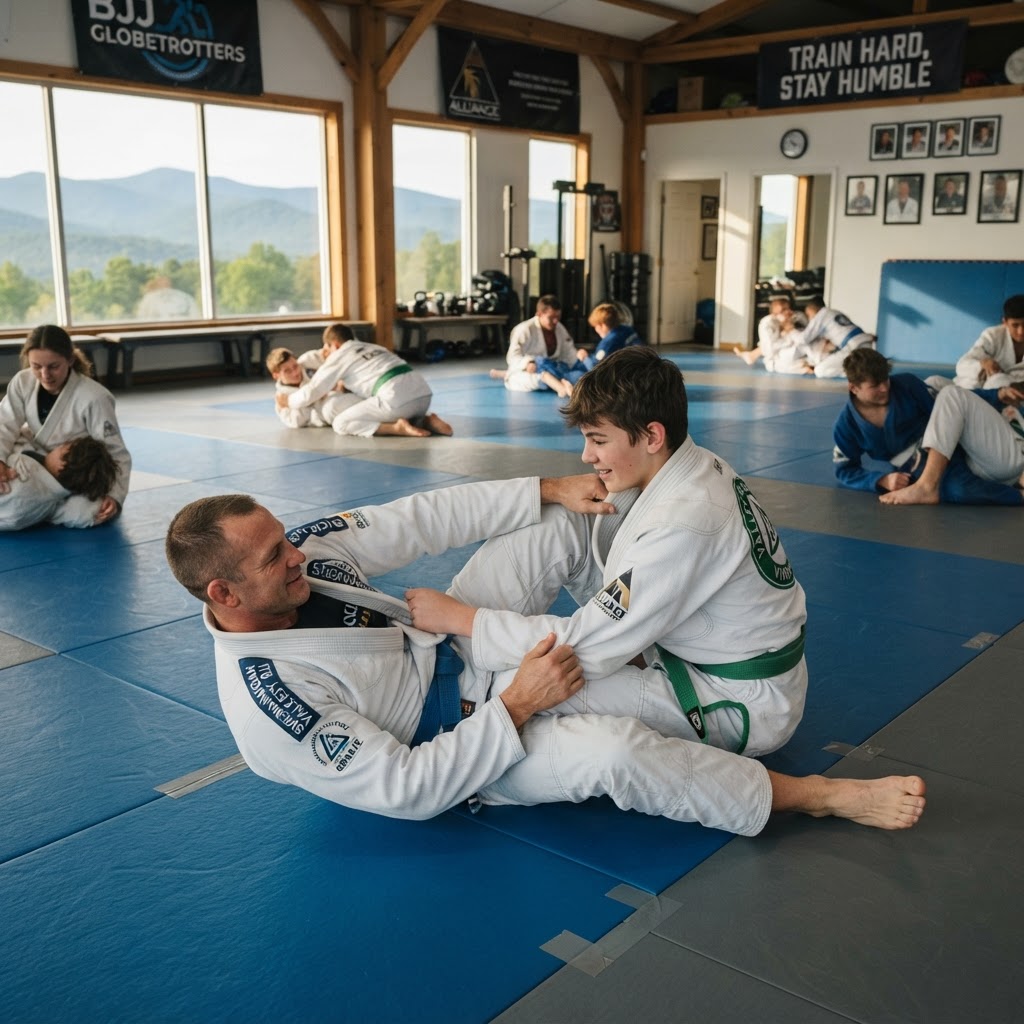
If you've ever wondered what BJJ is and why it's one of the fastest-growing martial arts in the world, you're in the right place. Brazilian Jiu-Jitsu (BJJ) is a grappling-based martial art and combat sport that focuses on ground fighting and submission holds. Unlike striking-based martial arts like karate or boxing, BJJ teaches you how to control and submit a larger, stronger opponent using leverage, technique, and body mechanics — making it ideal for self-defense, fitness, and competition.
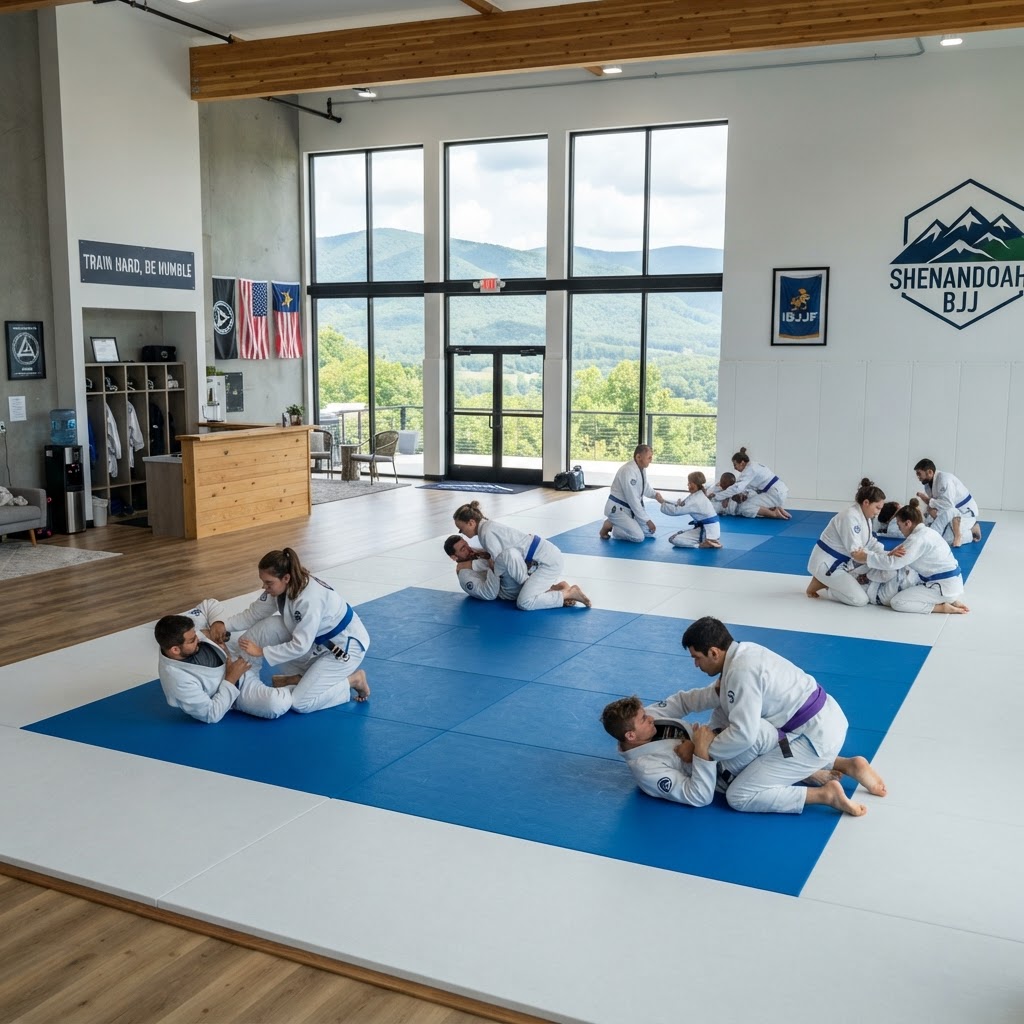
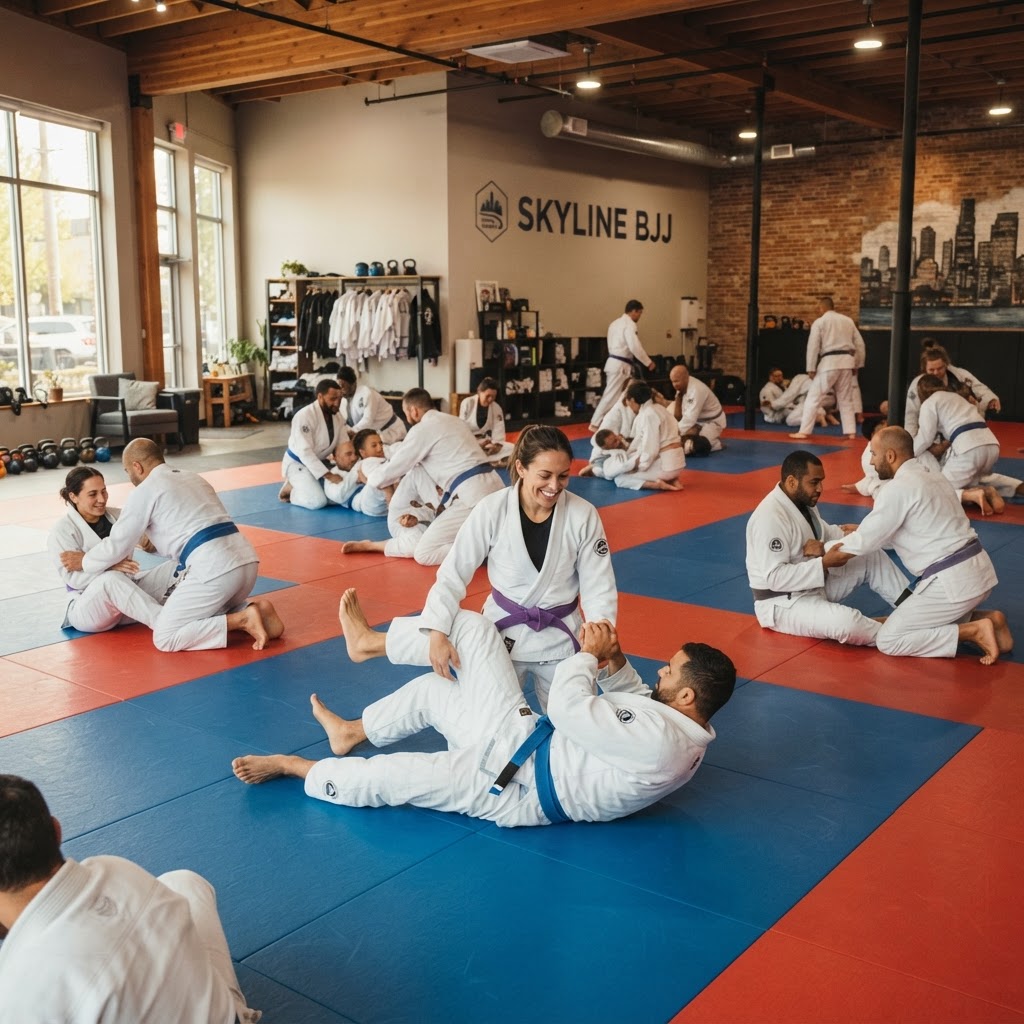
Here at Skyline Jiu-Jitsu in Waynesboro, Virginia, we teach Brazilian Jiu-Jitsu to students of all ages and skill levels — from kids building confidence to adults looking for a better way to get in shape. In this guide, we'll break down everything you need to know about BJJ.
What Does Brazilian Jiu-Jitsu Mean?
The word "Jiu-Jitsu" comes from Japanese and translates roughly to "the gentle art" or "the soft technique." The name reflects the core philosophy: rather than meeting force with force, Jiu-Jitsu teaches you to redirect an opponent's energy and use it against them.
Brazilian Jiu-Jitsu traces its roots to the early 1900s, when Japanese judoka Mitsuyo Maeda immigrated to Brazil and taught the art to Carlos Gracie. Carlos and his brother Helio Gracie refined the techniques over decades, emphasizing ground fighting and submission holds. The result was a martial art that allowed a smaller, weaker person to defeat a larger attacker — a principle that remains at the heart of BJJ today.
How Does BJJ Work?
Brazilian Jiu-Jitsu is built around two core concepts: positioning and submissions.
Positioning
In BJJ, position is everything. The art teaches a hierarchy of positions — from dominant positions like mount and back control to neutral positions like guard. The goal is to gain and maintain a dominant position where you can control your opponent while they struggle to escape.
Submissions
Once you've established a dominant position, BJJ teaches you how to finish the fight with a submission hold. Submissions include joint locks (arm bars, kimuras, leg locks), chokes (rear-naked chokes, triangle chokes, guillotines), and compression locks. When a training partner taps, it signals they're ready to stop. This "tap system" makes BJJ one of the safest full-contact martial arts to practice.
Gi vs. No-Gi: What's the Difference?
The Gi
The gi is the traditional uniform — a heavy cotton jacket, pants, and a colored belt. Training in the gi teaches you how to use clothing grips for control and submissions. It's slower-paced and more technical, excellent for beginners.
READY TO TRY BRAZILIAN JIU-JITSU?
Claim a FREE trial class at Skyline Jiu-Jitsu today!
Serving Waynesboro, Charlottesville, Fishersville & the Shenandoah Valley
No-Gi
No-gi training is done in a rashguard and shorts. Without the gi to grab, no-gi is faster-paced and relies more on body control. At Skyline Jiu-Jitsu, we offer both gi and no-gi classes.
The BJJ Belt System Explained
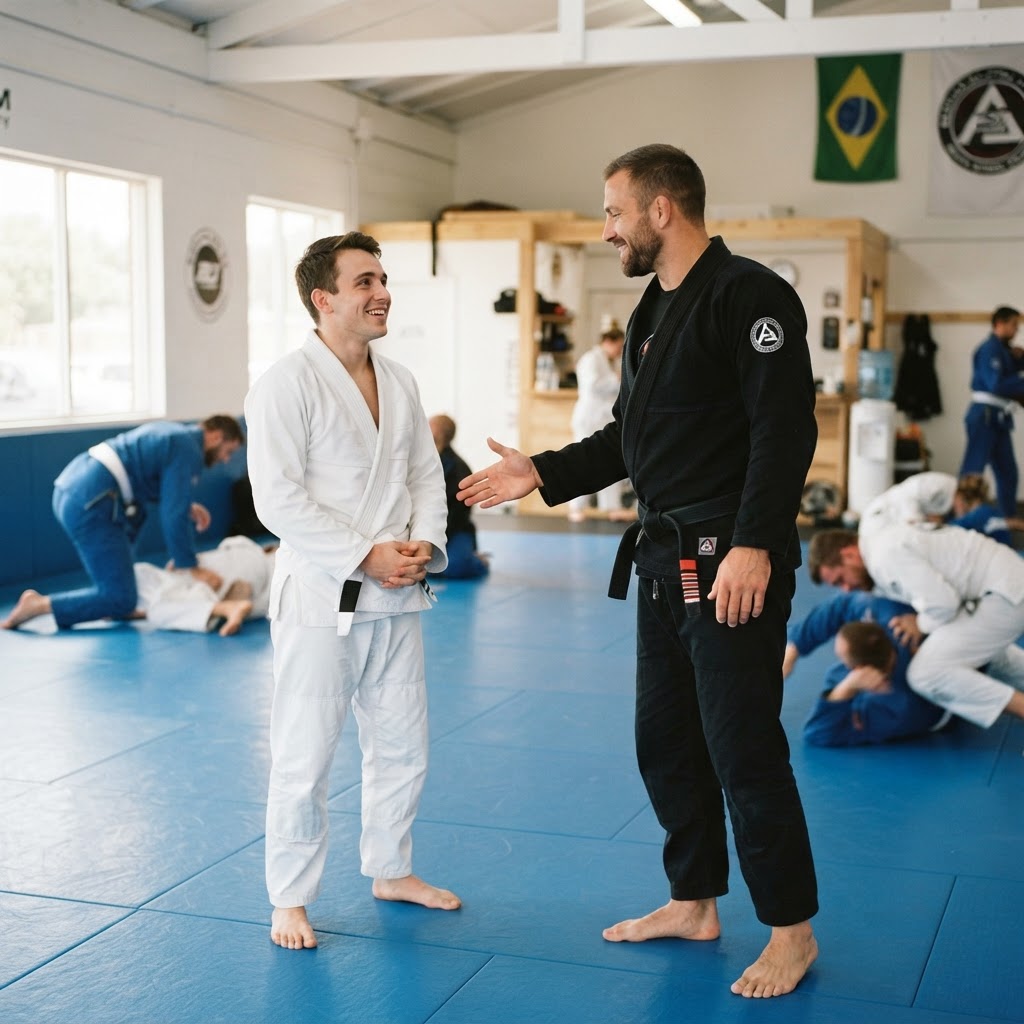
The adult BJJ belt order is: White Belt, Blue Belt, Purple Belt, Brown Belt, Black Belt. Earning a BJJ black belt typically takes 8-12 years of consistent training. For kids, the belt system uses additional colors (grey, yellow, orange, green) between white and blue.
Why Is BJJ So Popular?
- It works for everyone. BJJ's focus on technique means a smaller person can effectively defend themselves against a larger attacker.
- It's incredible exercise. A single BJJ class can burn 500-700 calories.
- It builds mental resilience. Learning to stay calm under pressure translates to every area of life.
- The community. BJJ academies have tight-knit, supportive communities.
- It's safe for kids. BJJ teaches children self-defense without striking.
Is BJJ Right for Me?
BJJ is for everyone — parents looking for confidence-building activities for kids, adult beginners, former athletes, fitness seekers, and anyone interested in self-defense. At Skyline Jiu-Jitsu, we offer classes for all skill levels.
What to Expect at Your First BJJ Class
- Warm-up — Light stretching, mobility drills, and movement patterns.
- Technique instruction — The instructor demonstrates a technique, and you practice with a partner.
- Positional sparring — Work to improve or escape from specific positions.
- Cool down — Stretching and recap.
Getting Started at Skyline Jiu-Jitsu
If you live in Waynesboro, Fishersville, Charlottesville, or anywhere in the Shenandoah Valley and you're curious about Brazilian Jiu-Jitsu, we'd love to have you try a class. No experience is necessary.
Still have questions? Check out our class schedule or pricing.
Related: The Complete BJJ Belt System Explained | Martial Arts for Kids | BJJ vs Wrestling
READY TO TRY BRAZILIAN JIU-JITSU?
Claim a FREE trial class at Skyline Jiu-Jitsu today!
Serving Waynesboro, Charlottesville, Fishersville & the Shenandoah Valley