# BJJ Positions Explained: The Essential Positions Every Student Should Know
If you are learning Brazilian Jiu-Jitsu, understanding **BJJ positions** gives you a map for every roll, drill, and competition match. Instead of seeing two people tangled on the mat, you begin to recognize who has control, who is defending, what each athlete is trying to improve, and which techniques make sense next. At Skyline Jiu-Jitsu in Waynesboro, Virginia, we teach students to use positions as a decision-making system—not as a list of memorized moves.
This guide explains the essential BJJ positions, why they matter, and how beginners can build a reliable game from them. Whether you train in Waynesboro, Fishersville, Charlottesville, or elsewhere in the Shenandoah Valley, learning the positional hierarchy will make your first months of training more productive and much less confusing.
## Why BJJ positions matter
Brazilian Jiu-Jitsu is often described as a martial art where technique allows a smaller person to control a larger opponent. That is true, but the technique works because position comes first. A well-timed submission from a poor position is difficult to finish; a strong position gives you balance, control, and time to make good decisions.
Most rounds can be understood through three questions:
1. Who is in the more dominant position?
2. Is the person in control improving position or attacking a submission?
3. Is the person underneath creating frames, recovering guard, escaping, or conceding a better position?
These questions apply in gi and no-gi BJJ, during live sparring, and even in self-defense situations. They also give instructors and training partners a shared language. When a coach says “hold side control for three seconds” or “recover your guard,” you know exactly what to do.
## The BJJ positional hierarchy
A simple BJJ positional hierarchy moves from neutral or less controlled positions toward increasingly dominant control. The exact order can change depending on the ruleset and the situation, but beginners commonly study:
- Standing and takedown positions
- Closed guard and open guard
- Half guard
- Side control
- Knee-on-belly
- Mount
- Back control
The goal is not to force every round into one perfect sequence. Real grappling is dynamic. A skilled partner may escape side control before you reach mount, or you may choose to attack from guard instead of passing. The hierarchy simply helps you understand why one position is generally safer and more valuable than another.
## 1. Standing: the match begins here
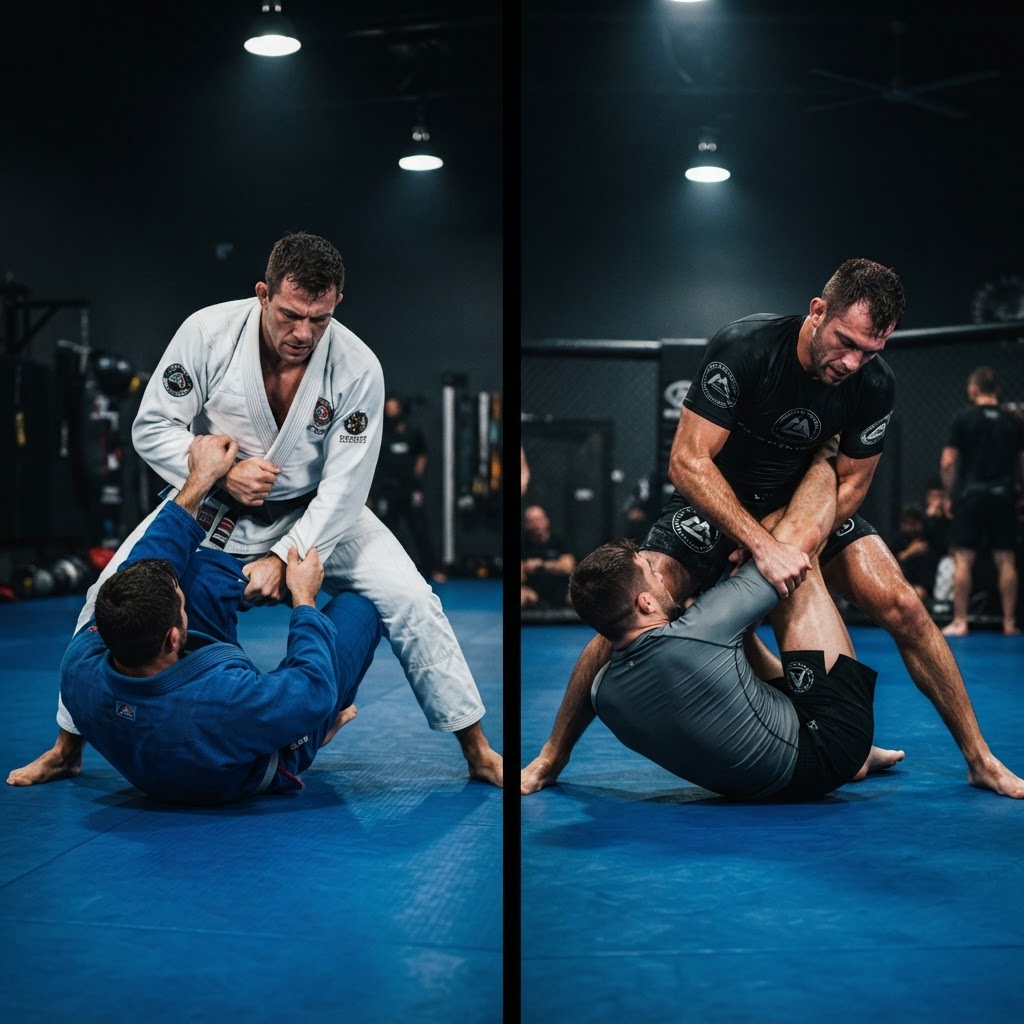
Standing is where distance, grips, posture, and balance matter. In a BJJ class, students may practice wrestling-style takedowns, body locks, trips, or pulling guard. The objective is to bring the exchange to the ground while maintaining your own balance and avoiding unnecessary exposure to a takedown.
Good standing fundamentals include keeping your head and hips in a strong posture, controlling inside space, and learning to move your feet rather than reaching with your upper body. Beginners do not need to become expert wrestlers before training Brazilian Jiu-Jitsu, but learning safe takedown mechanics makes every class more useful.
At Skyline Jiu-Jitsu, we scale standing work for each student. Someone new to martial arts may start with balance drills and controlled entries, while an experienced wrestler can explore how takedowns connect to passing and top control.
## 2. Closed guard: control from the bottom
Closed guard is one of the most recognizable BJJ positions. The bottom player wraps their legs around the top player’s waist and locks their ankles, creating a powerful control system. Although the bottom player is on their back, they are not helpless. They can break posture, control an arm, create angles, sweep, or attack submissions.
The top player’s first priorities are posture, base, and opening the legs safely. The bottom player’s priorities are managing distance, controlling the opponent’s posture, and using hip movement to create opportunities. This makes closed guard an excellent position for learning leverage and timing.
For beginners, closed guard demonstrates an important idea: being underneath does not automatically mean losing. In BJJ, the person with better structure and control can often dictate the exchange from the bottom.
## 3. Open guard: using frames, hooks, and movement
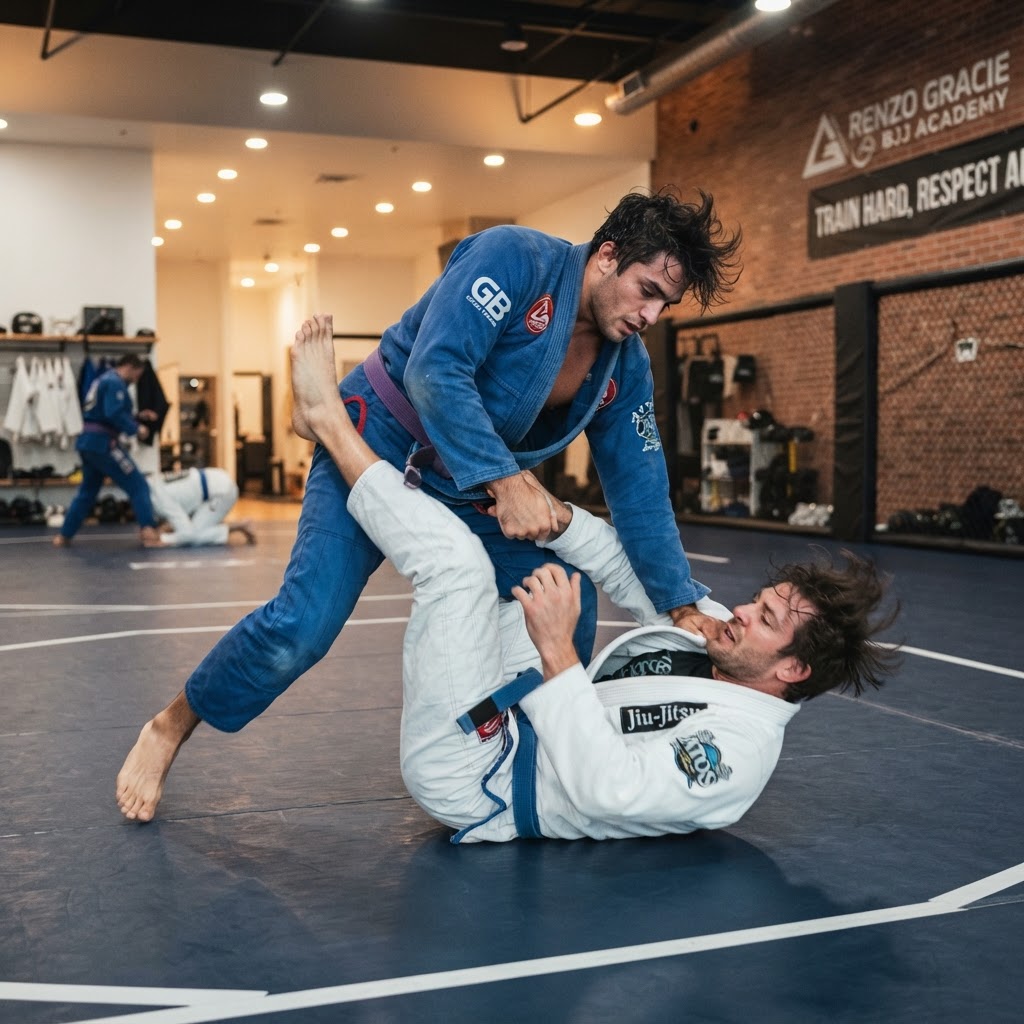
Open guard describes many guard variations in which the legs are not locked around the opponent’s waist. The bottom player may use feet on the hips, hooks around the legs, grips on the sleeves or wrists, or frames against the shoulders. Common styles include spider guard, butterfly guard, seated guard, and others.
Open guard is where students develop coordination and distance management. The bottom player wants to prevent the top player from passing while creating an angle for a sweep or attack. The top player wants to clear the legs, control the hips and upper body, and move into a dominant position.
This can look complicated at first, but the concepts are simple: maintain connection, protect your inside space, and keep your opponent from establishing stable control. Over time, your coach can help you discover which open-guard style fits your body, goals, and personality.
## 4. Half guard: winning the battle for an underhook
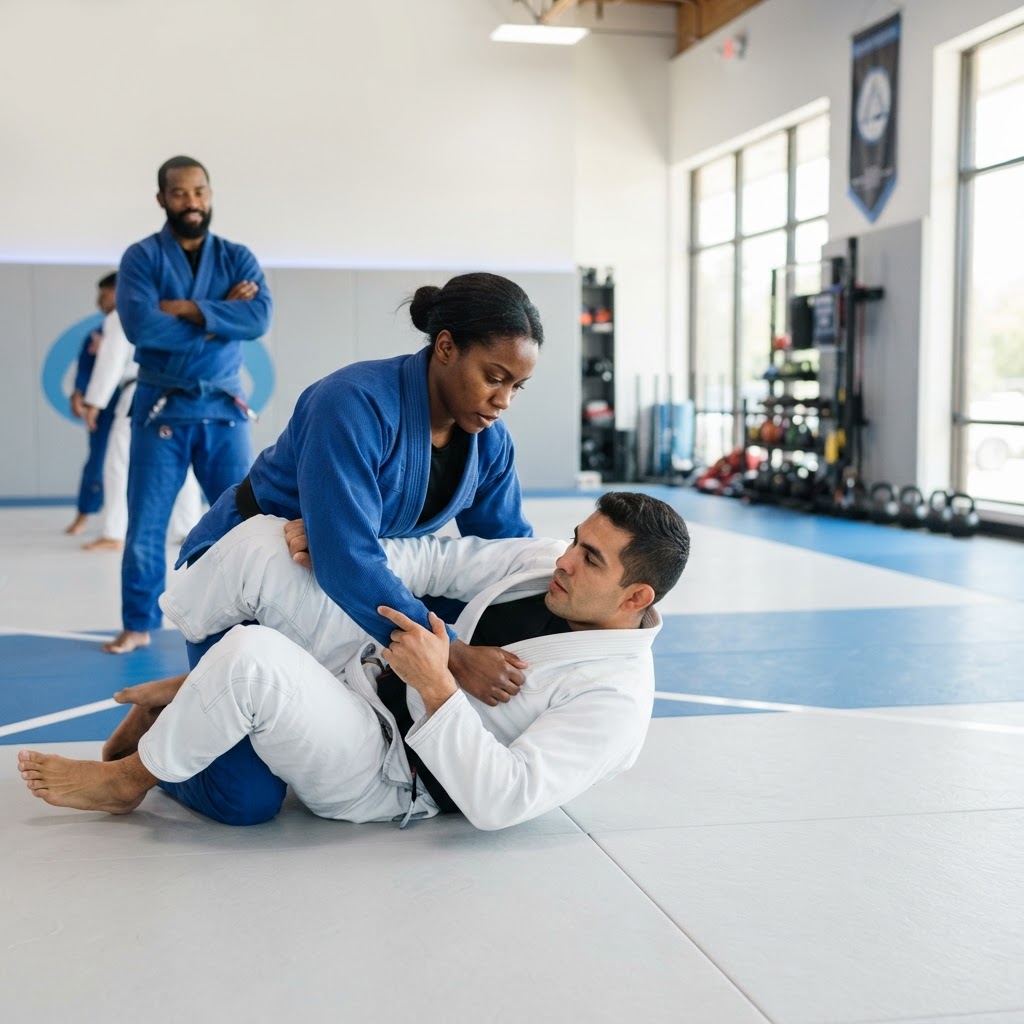
Half guard happens when one person controls one of the other person’s legs between their own legs. It is often treated as a transitional position, but it can be a complete offensive system for both athletes.
The top player usually works to flatten the bottom player, control the head and upper body, and free the trapped leg. The bottom player may use an underhook, frames, and hip movement to get onto their side, recover full guard, sweep, or come up to a better position.
A key lesson in half guard is that small details matter. Head position, elbow placement, and the direction of your hips can decide whether you are stuck or mobile. Students who learn half guard well become more comfortable in messy exchanges because they know how to rebuild structure instead of panicking.
## 5. Side control: chest-to-chest control
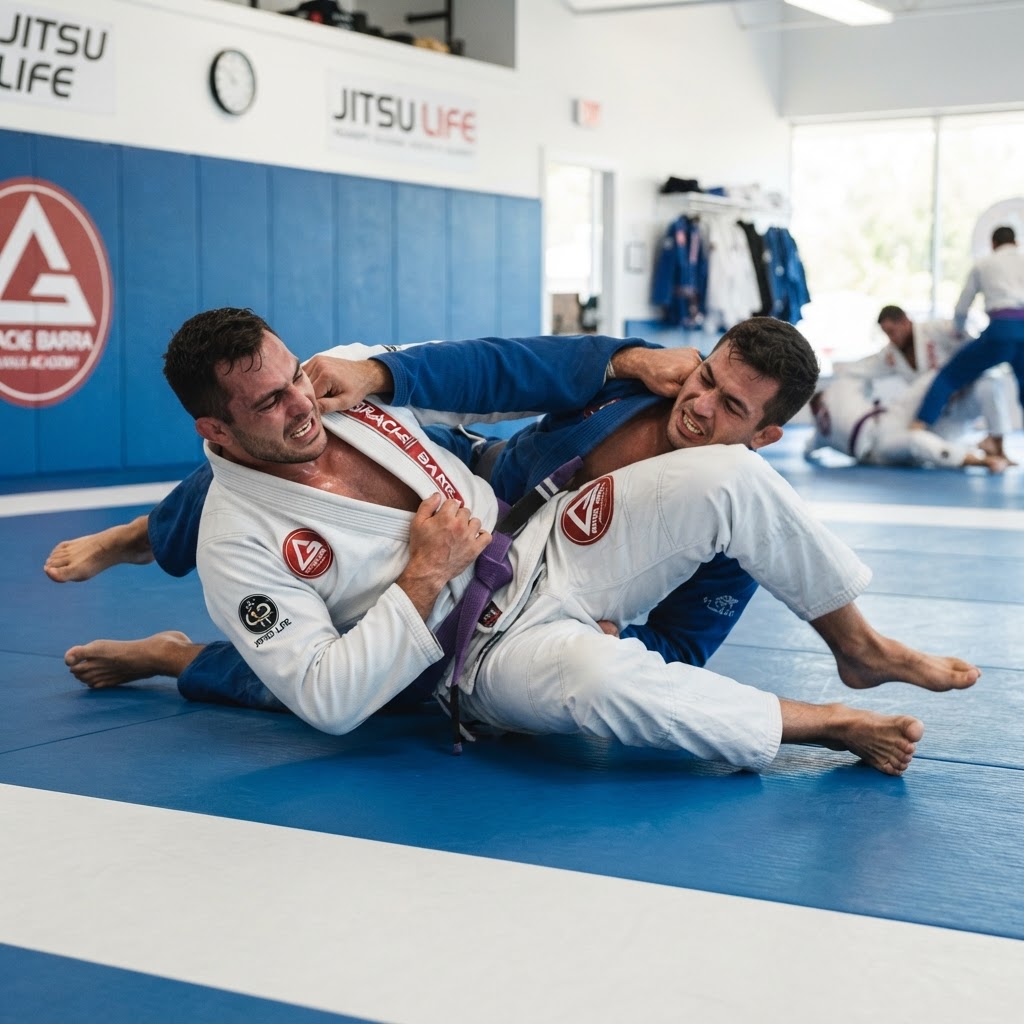
Side control is a dominant top position in which the top player controls the opponent’s torso from the side while the bottom player’s legs are no longer between them. The top player commonly uses a crossface, underhook, shoulder pressure, and a wide base to limit movement.
The top player should not simply lie on the bottom person. Effective side control uses connection and balance. You want to make escapes difficult while staying ready to transition to mount, knee-on-belly, north-south, or a submission. The bottom player uses frames, hip escapes, guard recovery, and carefully timed bridges to create space.
Side control is also a great place to learn patience. Many new students try to rush an armbar or turn immediately toward the opponent. A better approach is to stabilize first, identify the opponent’s frames, and improve your position when their defense creates an opening.
## 6. Knee-on-belly: mobility and pressure
Knee-on-belly is a controlling position where one knee rests across the opponent’s abdomen while the other foot stays posted for balance. It gives the top player mobility, pressure, and the ability to switch sides quickly. It can also force the bottom player to make defensive decisions, which may open transitions to mount or submissions.
Because knee-on-belly is more mobile than side control, balance is critical. The top player must avoid leaning too far forward or allowing the bottom player to catch the posted leg. The bottom player may frame, shrimp, turn, or use the movement to recover guard.
In training, the emphasis is on technical pressure rather than hurting a partner. Good BJJ positions allow both people to learn. At a welcoming academy, students can practice control without relying on excessive strength.
## 7. Mount: the highest-value top position
Mount is one of the most dominant BJJ positions. The top player sits over the opponent’s torso with both knees on the mat or in a stable riding position. From mount, the top player can apply pressure, attack the arms and neck, or transition to other controls.
A strong mount is built on balance. If the bottom player can bridge and roll without resistance, the position is unstable. The top player learns to widen the knees when appropriate, keep their hands posted or controlled, and follow the opponent’s movement. Different mount variations—such as low mount, high mount, and technical mount—solve different problems.
The bottom player’s objective is not to bench-press the person off. Mount escapes typically combine frames, hip movement, bridges, and timing. Students may learn the trap-and-roll escape, elbow escape, or transitions to half guard. These techniques teach one of BJJ’s most important principles: escape by creating structure and angles, not by trying to win a strength contest.
## 8. Back control: control without chasing
Back control is often considered the most dominant BJJ position because the person in control is behind the opponent, where strikes are limited or absent in sport BJJ and the rear naked choke becomes a major threat. The top player uses hooks or a body triangle, controls the shoulders, and keeps their chest connected to the opponent’s back.
The bottom player focuses on protecting their neck, controlling the choking arm, turning toward the floor or a safe side, and clearing the hooks. The top player must stay attached while moving with the defender instead of reaching and losing balance.
Back control rewards calm decision-making. A rushed submission attempt can give the defender an escape. A patient athlete maintains position, isolates the neck or arm, and lets the opening develop.
## The difference between position and submission
A submission is the finish; a position is the platform that makes the finish possible. Beginners often try to hunt for an armbar or choke before they have controlled the hips, shoulders, or head. When the opponent escapes, it can feel as if the technique failed, when the real issue was that the position was not stable enough.
A useful training rule is: control, improve, isolate, then attack. For example, from side control you may first establish a crossface and underhook, move to mount, isolate an arm, and then attack. This sequence makes your technique more repeatable and reduces the need for frantic strength.
## How to study BJJ positions as a beginner
You do not need to memorize every guard or submission before your first class. Start with a small positional checklist:
- Learn how to maintain posture and base.
- Learn one escape from mount and one escape from side control.
- Learn how to recover guard when your legs are cleared.
- Learn one reliable way to pass a basic guard.
- Learn how to hold side control, mount, and back control safely.
During live rounds, choose one position to focus on. If you are underneath side control, make your goal guard recovery rather than an immediate submission. If you are on top, practice stabilizing before attacking. This kind of focused repetition turns confusing rounds into useful lessons.
Training consistently also matters more than trying to learn everything at once. At Skyline Jiu-Jitsu, students in Waynesboro and the surrounding Shenandoah Valley can build positional awareness through fundamentals classes, drilling, and supervised sparring. Beginners from Fishersville and Charlottesville can start at an appropriate pace and develop confidence one position at a time.
## Start learning at Skyline Jiu-Jitsu
The best way to understand BJJ positions is to feel how they work with a qualified instructor and a supportive training partner. You will learn how to move safely, communicate with your partner, and apply technique without depending on size or athletic experience.
If you are comparing martial arts in Waynesboro, looking for BJJ near Charlottesville, or searching for a practical activity in Fishersville, Skyline Jiu-Jitsu offers a welcoming place to begin. See our [class schedule](https://www.skylinejiujitsu.com/schedule) and [pricing options](https://www.skylinejiujitsu.com/pricing) to find a training time that fits your week.
## Related Skyline Jiu-Jitsu guides
- [The Complete BJJ Belt System Explained](https://www.skylinejiujitsu.com/blog/bjj-belt-system-explained)
- [Gi vs. No-Gi BJJ: Key Differences](https://www.skylinejiujitsu.com/blog/gi-vs-no-gi-bjj-differences)
- [What Is Brazilian Jiu-Jitsu?](https://www.skylinejiujitsu.com/blog/what-is-brazilian-jiu-jitsu)
- [What to Wear to Your First BJJ Class](https://www.skylinejiujitsu.com/blog/what-to-wear-to-your-first-bjj-class)
START TRAINING TODAY
READY TO TRY BRAZILIAN JIU-JITSU?
Claim a FREE trial class at Skyline Jiu-Jitsu today!
Serving Waynesboro, Charlottesville, Fishersville & the Shenandoah Valley
Start Training Today
READY TO TRY BRAZILIAN JIU-JITSU?
Claim a FREE trial class at Skyline Jiu-Jitsu today!
Serving Waynesboro, Charlottesville, Fishersville & the Shenandoah Valley