BJJ Half Guard: The Complete Guide to Mastering This Essential Position
When you first step onto the mats at Skyline Jiu-Jitsu in Waynesboro, Virginia, you'll quickly discover that the BJJ half guard is one of the most important positions you'll ever learn. Whether you're a white belt just starting out or an advanced practitioner refining your game, the half guard is a position that every grappler needs to understand deeply. It's a transitional position that can be both a defensive refuge and an offensive launching pad, making it one of the most versatile tools in Brazilian Jiu-Jitsu.
In this comprehensive guide, we'll break down everything you need to know about the BJJ half guard, from the fundamental concepts to advanced half guard sweeps, escapes, and submissions. If you're training in the Shenandoah Valley region — whether in Waynesboro, Charlottesville, Fishersville, or anywhere nearby — this guide will give you the knowledge you need to level up your half guard game.
What Is the BJJ Half Guard?
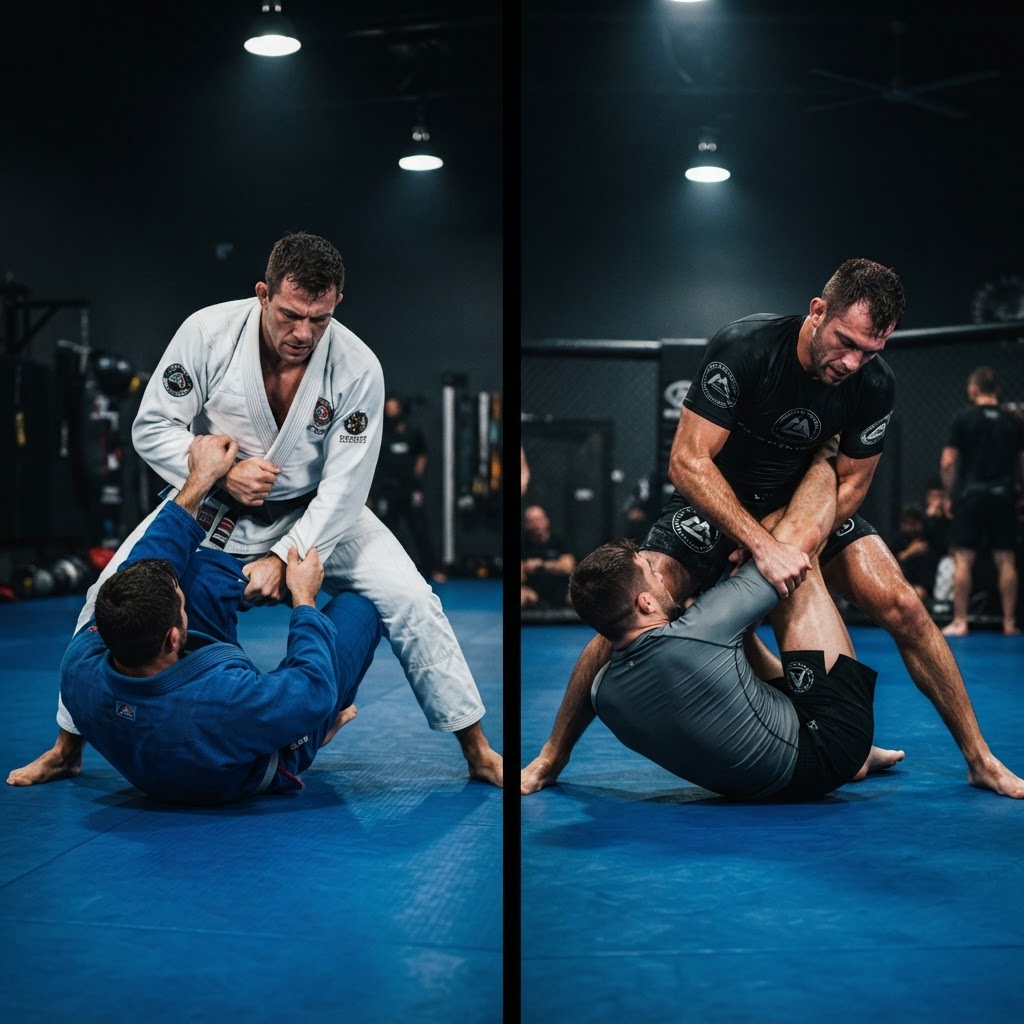
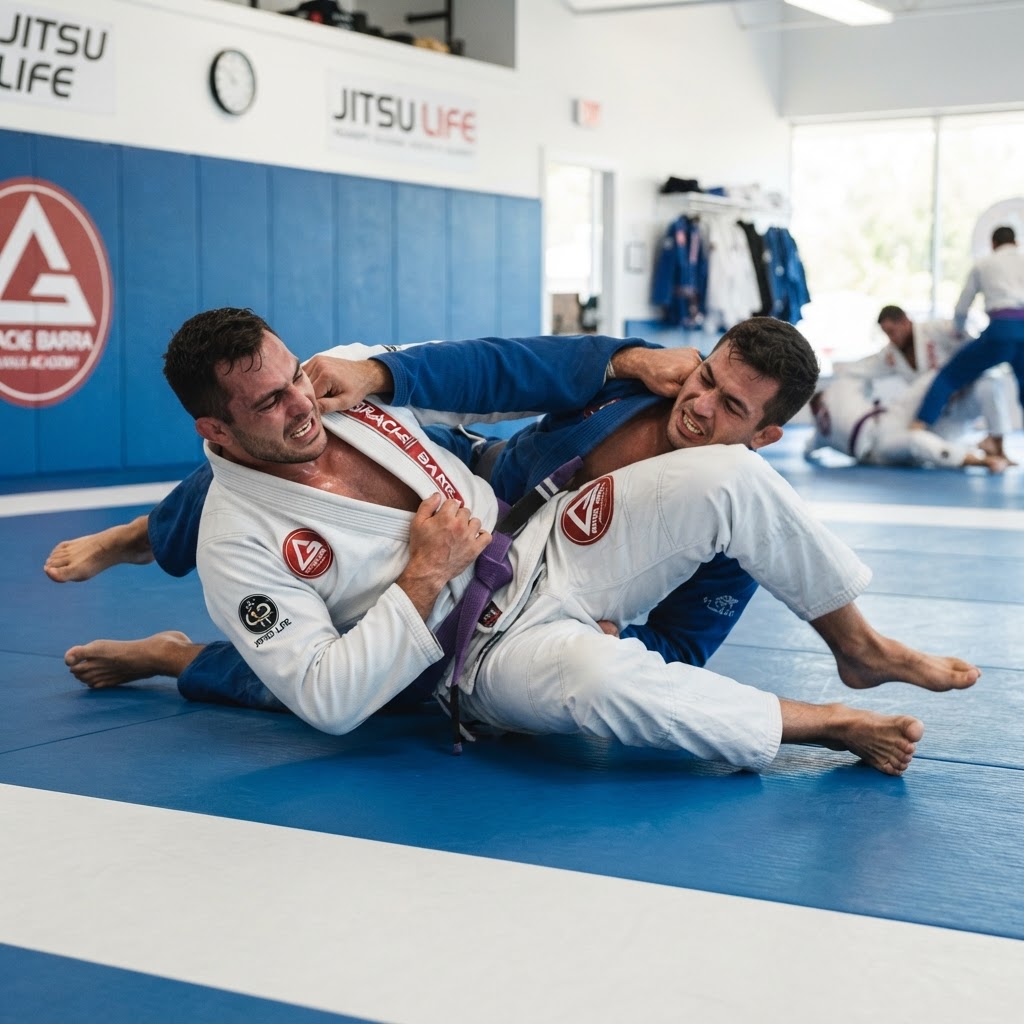
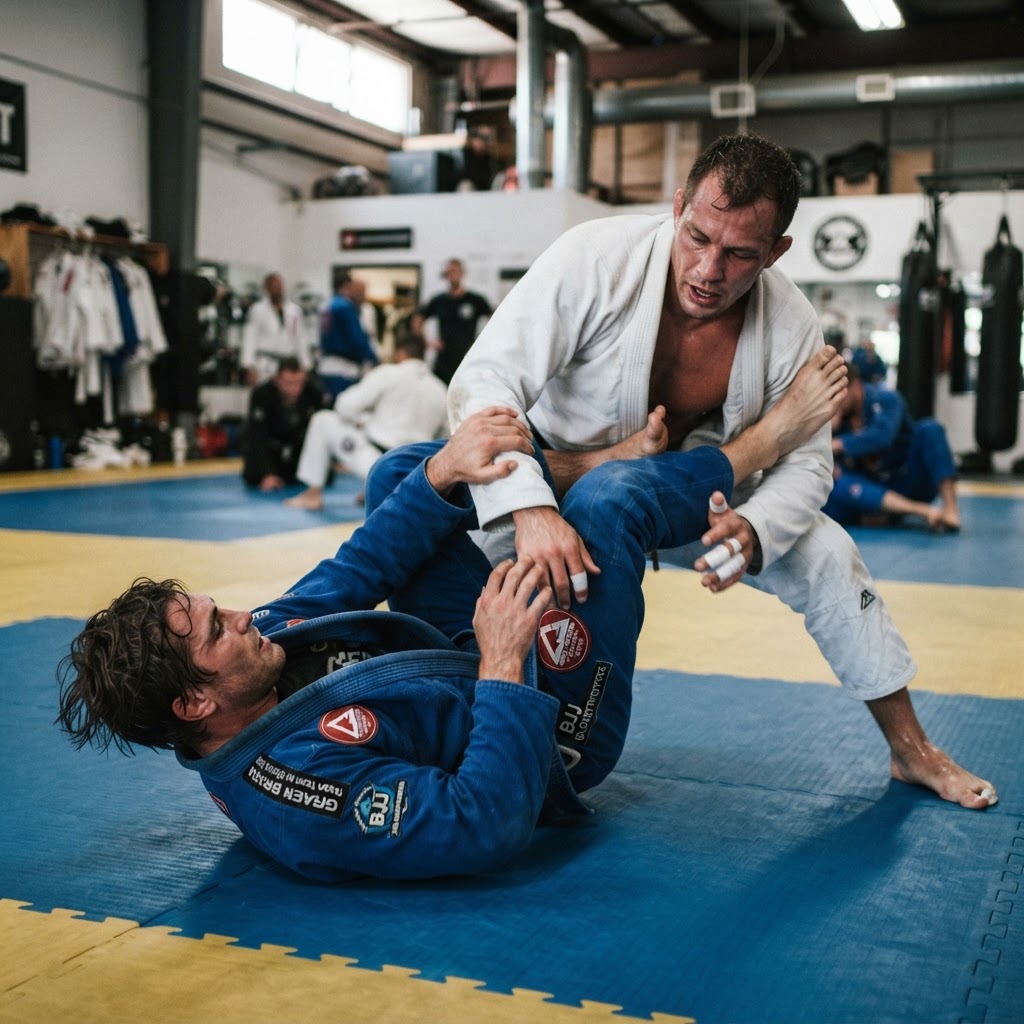
The half guard is a ground position in Brazilian Jiu-Jitsu where the bottom player has trapped one of the top player's legs between their own two legs. Unlike full guard, where both of the opponent's legs are controlled, the half guard only controls one leg. This makes it a more vulnerable position than full guard, but also one with tremendous offensive potential.
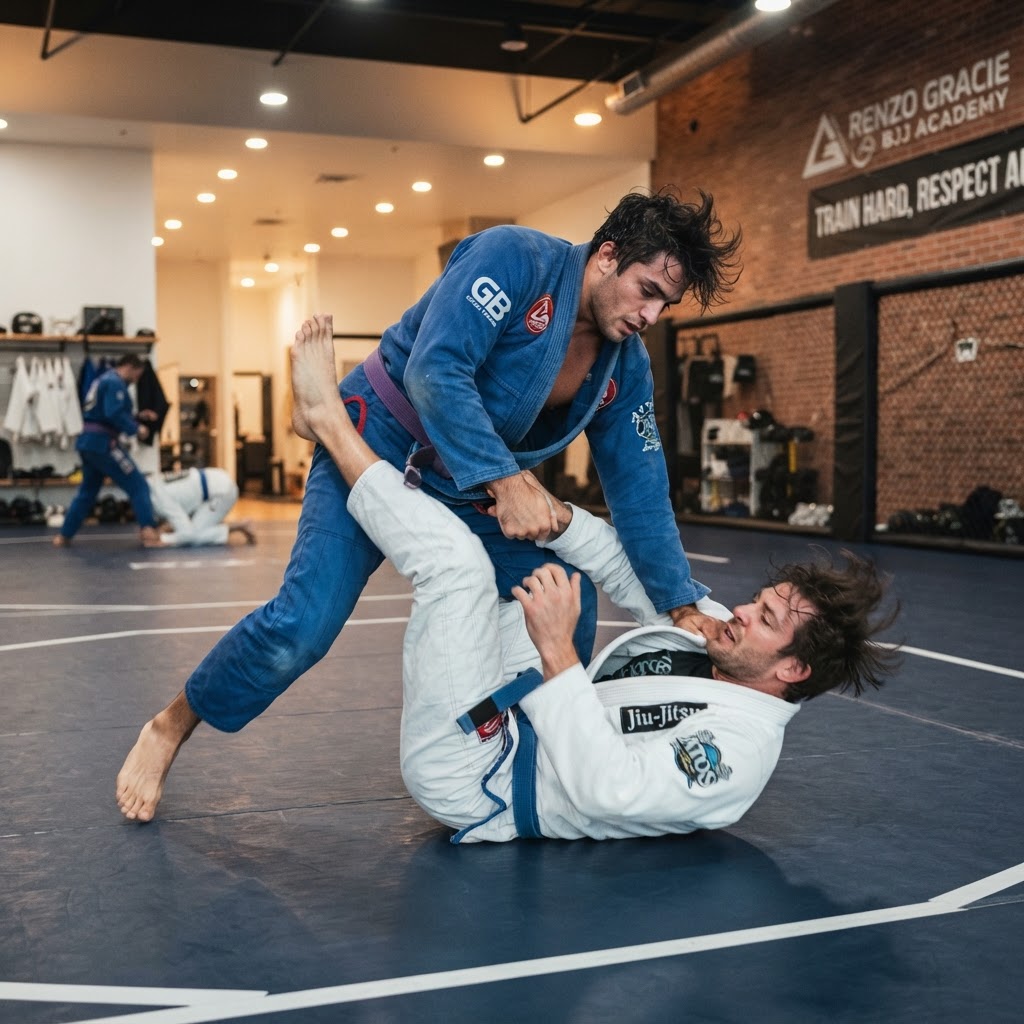
The half guard exists in the space between being passed and maintaining guard. When someone is working on BJJ guard passing and gets past one leg, the bottom player can recover by trapping that leg in half guard. It's often the last line of defense before your opponent achieves side control or mount, which is why mastering half guard escapes is critical for every BJJ student.
At our Waynesboro academy, we teach the half guard as both a survival position and an attacking position. The beauty of the half guard is that it flows naturally from many other BJJ positions, making it an essential part of any well-rounded grappling game.
Types of Half Guard in Brazilian Jiu-Jitsu
Not all half guards are created equal. Over the years, BJJ practitioners have developed several variations of the half guard, each with its own strengths, weaknesses, and strategic purposes. Understanding these variations will help you choose the right approach for your body type and rolling style.
1. Traditional Half Guard (Defensive Half Guard)
The traditional half guard is the most basic form, where the bottom player is on their side with one leg trapped. This is the position most beginners find themselves in when their guard is being passed. The focus here is on preventing the top player from flattening you out and establishing control. From here, you can work on recovering full guard or setting up basic half guard sweeps.
2. Deep Half Guard
The deep half guard is a more offensive variation where the bottom player swims under the top player's hips, getting very deep underneath them. This position was popularized by BJJ legends like Jeff Glover and Bernardo Faria. In deep half guard, you're essentially upside down, using the opponent's leg as a lever to sweep them. It's a highly effective position that works well against larger opponents because it uses leverage rather than strength. If you're training in Charlottesville or anywhere in the Shenandoah Valley, learning deep half guard can give you a powerful tool against bigger training partners.
3. Z-Guard (Shin Shield Half Guard)
The Z-guard, also known as the shin shield, involves placing your bottom shin across the opponent's thigh to create a frame. This creates distance and makes it difficult for the top player to press their weight down on you. The Z-guard is excellent for setting up knee-cut counters and kimura attacks. It's a favorite among no-gi grapplers and works well in both gi and no-gi BJJ.
4. Lockdown Half Guard
The lockdown is a half guard variation developed within the 10th Planet Jiu-Jitsu system. It involves trapping the opponent's leg by weaving your own legs together in a specific configuration that "locks down" their leg. This gives you tremendous control and opens up specific submission chains and sweeps. While it's more commonly seen in no-gi grappling, elements of the lockdown can be adapted for gi training as well.
Essential Half Guard Sweeps
The half guard is not just a defensive position. With the right technique, you can turn it into one of your most effective sweeping platforms. Here are the essential half guard sweeps every practitioner should know.
The Old School Sweep
One of the most fundamental half guard sweeps, the old school sweep involves reaching across to grab the opponent's far ankle or pant leg, then driving forward to knock them off balance. This sweep works especially well in the gi because you can use pant grips for control. The key is to time your sweep when the opponent's weight shifts forward.
The Knee Lever Sweep
From traditional half guard, the knee lever sweep uses your outside leg to lever the opponent's trapped leg, creating an imbalance that allows you to come on top. This is one of the first sweeps we teach at Skyline Jiu-Jitsu because it demonstrates the core principle of using leverage over strength — a principle that defines Brazilian Jiu-Jitsu.
The Deep Half Guard Homer Sweep
When playing deep half guard, the Homer sweep (named after Homer Simpson's bowling motion) is one of the most reliable attacks. You use the opponent's leg as a lever, rolling them over by driving their leg across their body. It's a sweep that works surprisingly well against much larger opponents, making it ideal for smaller grapplers in Waynesboro and the surrounding Shenandoah Valley.
The Plan B Sweep
The Plan B sweep is another deep half guard classic. From deep half, you reach up and grab the opponent's belt or waist, then use a bridging motion to sweep them. It's called "Plan B" because it's often used when your primary sweep attempt is defended. Having a Plan B is essential in BJJ, and this sweep exemplifies the adaptability that makes jiu-jitsu such an effective martial art.
Half Guard Escapes: Getting Out of Trouble
While sweeps are the offensive side of the half guard, escapes are the defensive side. When you're stuck in half guard with a heavy opponent on top of you, knowing how to escape is crucial. Here are the most effective half guard escapes.
Recovering to Full Guard
The simplest and most fundamental half guard escape is recovering to full guard. From traditional half guard, use your frames to create space, then bring your outside leg through to re-establish full guard. This is one of the first techniques taught to beginners because it reinforces the importance of never giving up position without a fight. If you're just starting your BJJ journey, check out our guide on BJJ for beginners for more foundational concepts.
The Bridge and Roll Escape
When your opponent is trying to flatten you out in half guard, the bridge and roll is a powerful escape. Bridge explosively to create space, then use the momentum to either recover guard or come to your knees. This escape relies on proper bridging mechanics, which is a fundamental movement in BJJ that you'll practice repeatedly during your training.
The Underhook Escape
Getting an underhook is one of the most important things you can do from bottom half guard. With a strong underhook, you can either drive forward to your knees (the "dogfight" position) or use it to set up sweeps. The underhook is the key that unlocks many half guard escapes and attacks, which is why our instructors at Skyline Jiu-Jitsu emphasize it so heavily during drilling.
Half Guard Submissions
Yes, you can submit people from the half guard. While the position is primarily known for sweeps and escapes, there are several dangerous half guard submissions that can catch opponents off guard.
The Kimura from Half Guard
The kimura is one of the most powerful submissions available from bottom half guard. By isolating the opponent's far arm and applying the kimura grip, you can threaten a submission that often forces them to adjust their weight, opening up sweep opportunities. The kimura from half guard is especially effective in no-gi grappling, where it's harder for the opponent to grip and defend.
READY TO TRY BRAZILIAN JIU-JITSU?
Claim a FREE trial class at Skyline Jiu-Jitsu today!
Serving Waynesboro, Charlottesville, Fishersville & the Shenandoah Valley
The Guillotine Choke
If your opponent drops their head too low in half guard, the guillotine choke becomes a real threat. You can secure a guillotine grip and use your half guard to prevent them from escaping, then tighten the choke. This is one of the essential BJJ submissions that works from multiple positions, including half guard.
The Triangle Choke from Z-Guard
From the Z-guard position, you can set up a triangle choke by shooting your legs up around the opponent's neck and arm. This is a more advanced technique that requires good timing and flexibility, but it's a submission that can end a match instantly when executed correctly.
The Calf Slicer
For those who like leg locks, the calf slicer can be applied from certain half guard configurations, particularly the lockdown. By compressing the opponent's calf against their own thigh, you create a painful submission that taps even experienced grapplers. Leg lock entries from half guard are becoming increasingly popular in modern BJJ, reflecting broader trends in the sport's evolution.
Common Half Guard Mistakes to Avoid
Even experienced grapplers make mistakes in the half guard. Here are the most common errors we see at our Waynesboro academy and how to fix them.
Getting flattened out: The number one mistake is allowing your opponent to flatten you onto your back. Always fight to stay on your side. Being flat on your back in half guard is the worst possible position because it strips away your offensive options and makes you vulnerable to cross-face pressure.
Forgetting the underhook: The underhook is your best friend in half guard. Without it, you'll struggle to create the space needed for sweeps and escapes. Always fight for the underhook on the far side.
Neglecting frames: Your arms need to frame against the opponent's shoulder and cross-face pressure. Without proper frames, you'll get crushed and lose your ability to attack.
Being too passive: The half guard is not a rest position. If you sit passively, your opponent will eventually pass. Always be working toward a sweep, escape, or submission. This proactive mindset is something we instill in every student, from white belts to advanced practitioners.
Training the Half Guard at Skyline Jiu-Jitsu
At Skyline Jiu-Jitsu in Waynesboro, Virginia, we believe the half guard is a position every student should develop. Our curriculum systematically introduces half guard concepts at each belt level, building from basic recovery techniques at white belt to advanced deep half guard and lockdown systems at higher ranks. This structured approach is part of what makes the BJJ belt system so effective for skill development.
Students from across the Shenandoah Valley — including Fishersville, Charlottesville, Staunton, and surrounding areas — come to train with us because of our detailed, systematic approach to technique. Whether you're interested in competition or just want to learn effective self-defense and get in great shape, the half guard is a position you'll use in every single training session.
Our classes cover both gi and no-gi half guard techniques, ensuring you're prepared regardless of the training format. If you're curious about the differences between these training styles, our guide on gi vs no-gi BJJ breaks down how each format affects technique selection.
The Evolution of Half Guard in Modern BJJ
The half guard has come a long way from its origins as merely a last-ditch defensive position. In the early days of Brazilian Jiu-Jitsu, the half guard was something you ended up in when your guard was being passed — a position to escape from as quickly as possible. But over the past two decades, innovative grapplers have transformed it into one of the most sophisticated attacking systems in the sport.
The development of deep half guard, the lockdown, and modern leg lock entries from half guard have all contributed to this evolution. Understanding this history adds depth to your training. For more context on how BJJ has grown and changed over the years, check out our post on the history of Brazilian Jiu-Jitsu.
Today, the half guard is considered an essential part of any competitive grappler's arsenal. At major tournaments, you'll see athletes at the highest levels using half guard variations to sweep and submit world-class opponents. The same techniques that work at the highest levels of competition are the ones we teach at our academy in Waynesboro.
Tips for Developing Your Half Guard Game
Here are some practical tips for improving your half guard, whether you're a beginner or an experienced grappler:
- Start with the basics: Master the traditional half guard before exploring advanced variations like deep half or lockdown. A solid foundation makes everything else easier to learn.
- Drill the underhook: Practice getting the underhook from every half guard scenario. It's the single most important detail in the position.
- Train both sides: Don't neglect your non-dominant side. Being able to play half guard on both sides makes you a much more well-rounded grappler.
- Spar from the position: Ask your training partners to start in your half guard during sparring. Positional sparring is the fastest way to improve specific areas of your game.
- Watch high-level footage: Study matches of grapplers known for their half guard, like Bernardo Faria, Jeff Glover, and Lucas Leite. Analyze what makes their half guard so effective.
- Be patient: The half guard requires timing and sensitivity that take time to develop. Don't get frustrated if it takes months to feel comfortable in the position.
Conclusion
The BJJ half guard is far more than just a transitional position. It's a dynamic, multi-faceted part of Brazilian Jiu-Jitsu that offers sweeps, escapes, and submissions for grapplers of all levels. Whether you're playing traditional half guard, deep half guard, Z-guard, or lockdown, the key principles remain the same: stay on your side, fight for the underhook, maintain your frames, and always be attacking.
If you're in the Waynesboro, Charlottesville, or Fishersville area and want to develop your half guard — or any other aspect of your BJJ game — we'd love to have you on the mats. Our instructors at Skyline Jiu-Jitsu will guide you through every detail, from your very first class to your black belt and beyond. Check out our class schedule and pricing options to get started.
Related Posts
- BJJ Guard Passing: The Complete Guide to Breaking Through Any Defense
- BJJ Positions Explained: The Essential Positions Every Student Should Know
- Essential BJJ Submissions Every Grappler Should Know: A Complete Guide
- Gi vs No-Gi BJJ: Key Differences and Which Style Is Right for You
- The Complete BJJ Belt System Explained: Timeline, Stripes, and What to Expect
- The History of Brazilian Jiu-Jitsu: From Ancient Japan to Global Phenomenon
READY TO TRY BRAZILIAN JIU-JITSU?
Claim a FREE trial class at Skyline Jiu-Jitsu today!
Serving Waynesboro, Charlottesville, Fishersville & the Shenandoah Valley