Wrestling for BJJ: 7 Ways Wrestling Improves Your Brazilian Jiu-Jitsu
If you are searching for wrestling for BJJ, you are probably wondering whether wrestling skills can make you a better Brazilian Jiu-Jitsu athlete. The answer is yes. Wrestling teaches the stand-up habits that many jiu-jitsu practitioners need most: balance, pressure, takedowns, scrambling, hand fighting, and the ability to stay on top when an opponent is trying to escape.
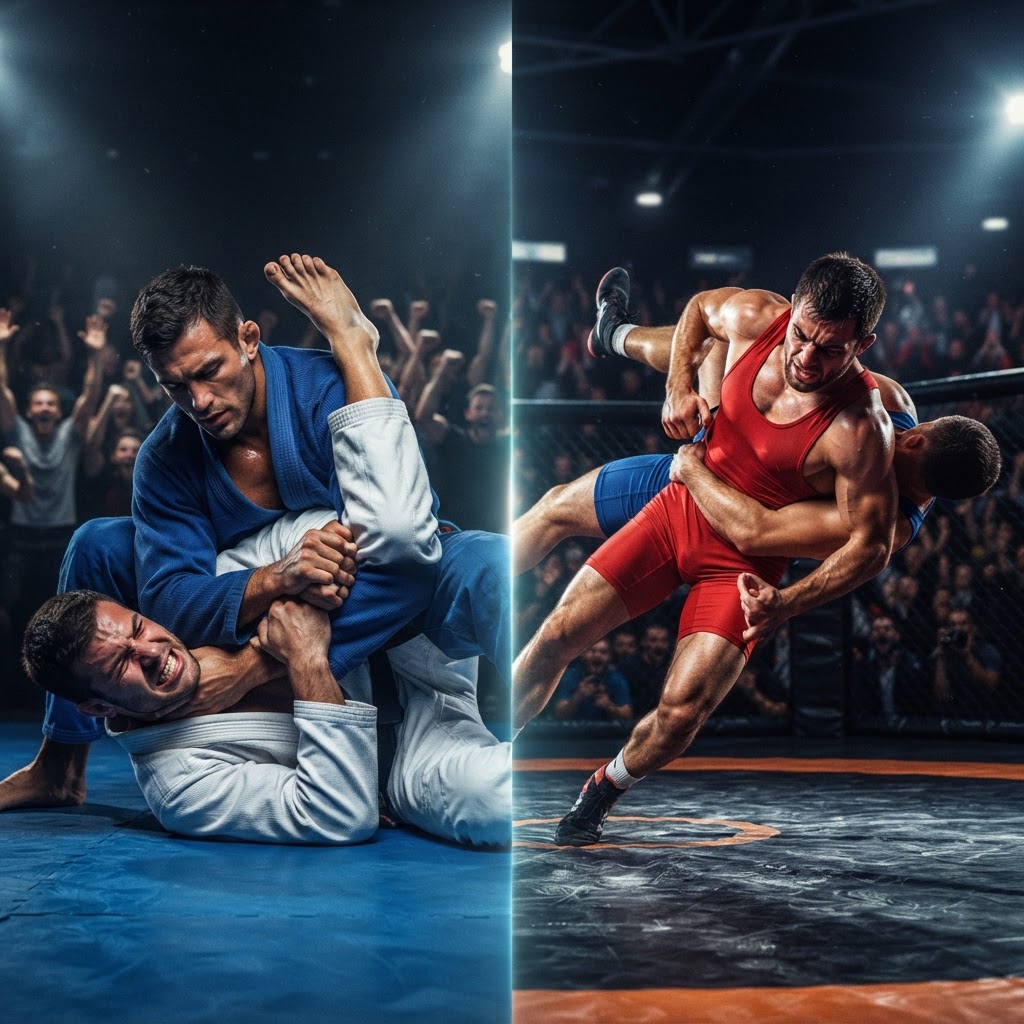
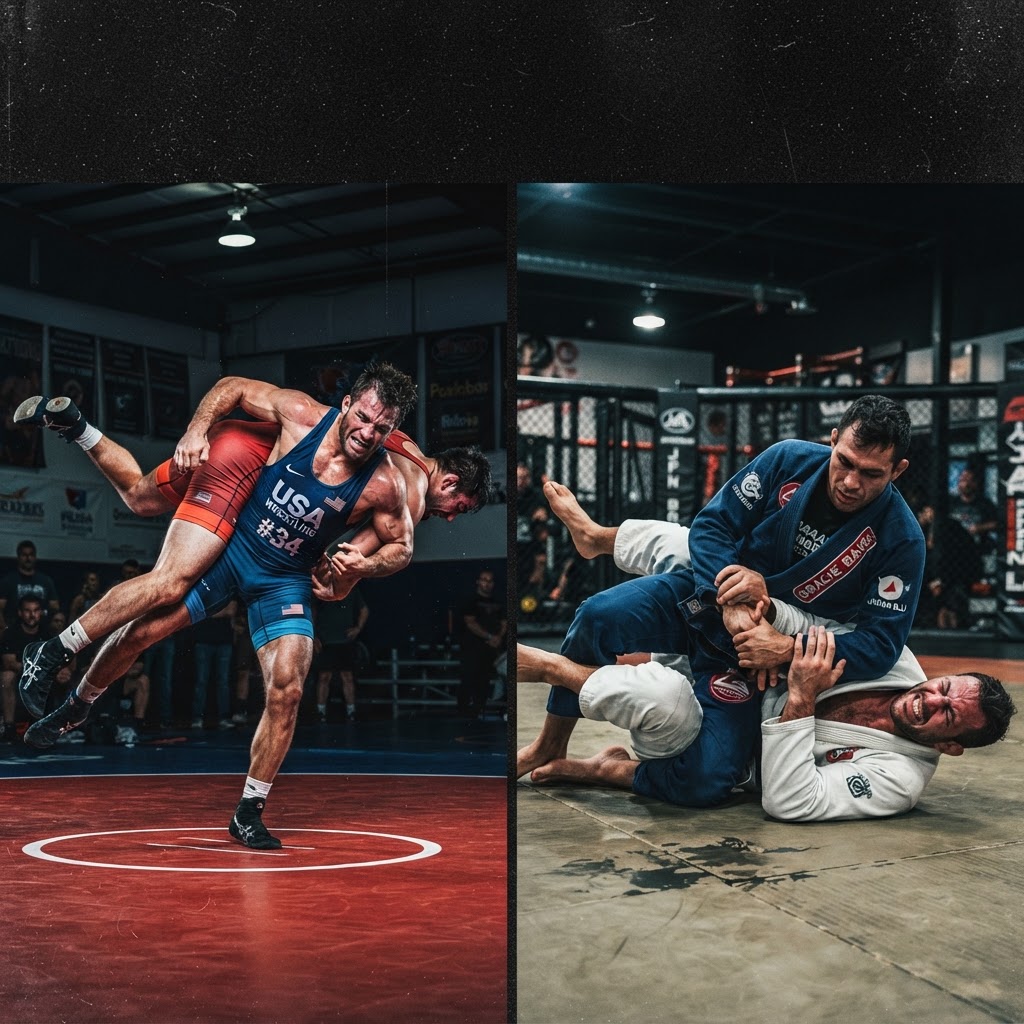
Wrestling and Brazilian Jiu-Jitsu are different sports, but they complement each other extremely well. A wrestler who learns BJJ develops a deeper understanding of submissions, guard, and positional escapes. A BJJ athlete who adds wrestling learns how to start exchanges on the feet, finish takedowns, defend shots, and build a strong top game. For athletes training at Skyline Jiu-Jitsu in Waynesboro, Virginia, this crossover can make every round more complete.
Why Wrestling for BJJ Is Such a Powerful Combination
Many BJJ rounds begin from a standing position, yet recreational students sometimes spend most of their training time on the ground. That can leave a gap between the opening grip fight and the positions where they feel most comfortable. Wrestling fills that gap by teaching you how to create contact, move an opponent, attack the legs or body, and land in a useful position.
The goal is not to turn every jiu-jitsu class into a wrestling practice. The goal is to take the wrestling skills that transfer safely and effectively to BJJ. In a grappling match, winning the takedown can give you top position, two points in many rulesets, and the opportunity to make your opponent carry your weight while you work toward a pass or submission.
- Better entries: Wrestling teaches you to close distance with a plan instead of reaching from too far away.
- Stronger top control: Pressure, hips, angles, and mat returns help you keep an opponent down.
- More confident scrambles: Wrestling develops the ability to react quickly when positions become unpredictable.
- Improved conditioning: Short, intense wrestling exchanges build repeat-effort fitness for hard BJJ rounds.
1. Wrestling Gives BJJ Athletes Reliable Takedowns
The most obvious benefit of wrestling for BJJ is a stronger takedown game. You do not need a huge collection of throws and shots. Most beginners can make real progress by learning a small system built around a stance, hand fighting, one primary attack, and one reliable backup.
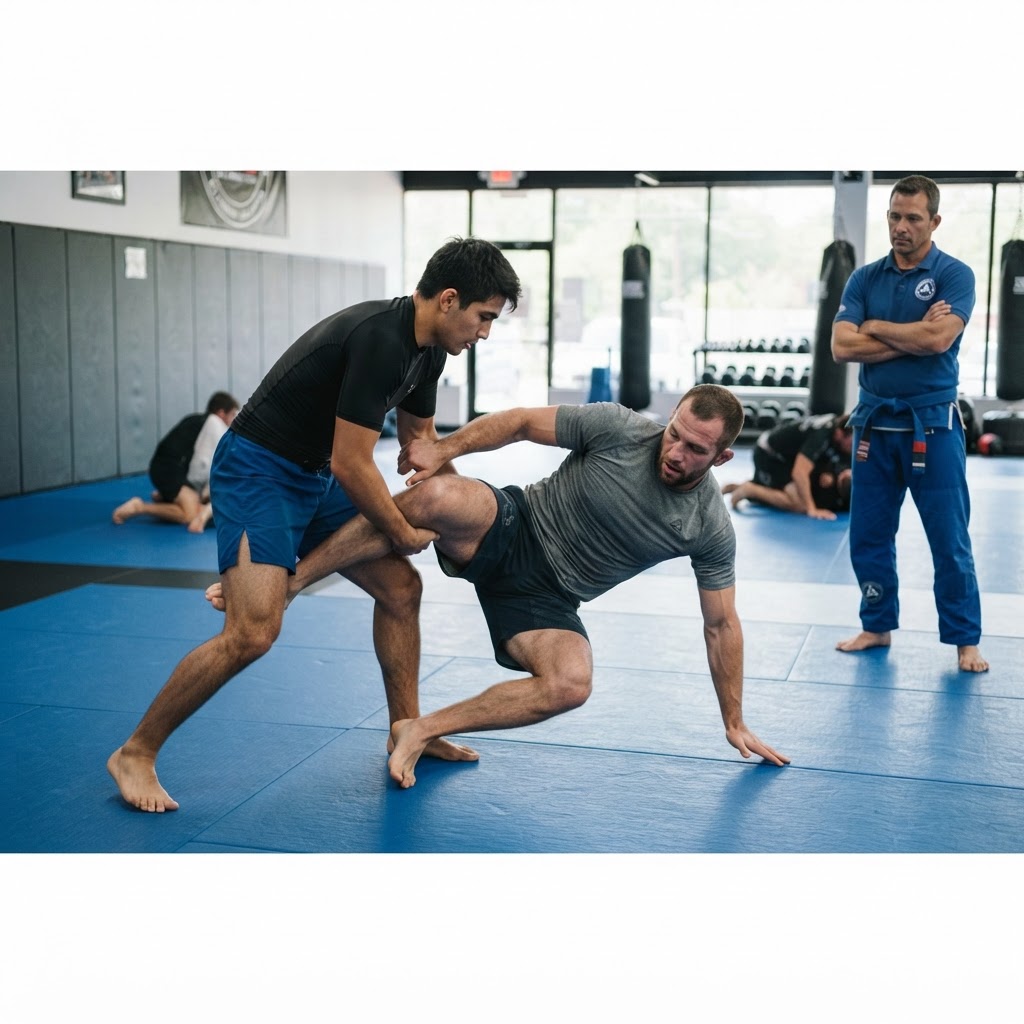
Useful wrestling takedowns for BJJ include the single leg, double leg, body lock, snap down to front headlock, and outside trip. Each attack should have a finish and a follow-up. For example, if your opponent defends a single leg by pushing your head down, you might switch to a running-the-pipe finish, climb to a body lock, or use the reaction to take the back.
In BJJ, the finish is not the end of the exchange. Land with posture, control the hips, avoid exposing your neck, and immediately establish a stable position. A takedown that leaves you caught in a guillotine or underneath an opponent is not a successful BJJ takedown just because your opponent touched the mat first.
2. Wrestling Improves Your Stand-Up Hand Fighting
Before a takedown, there is usually a battle for position. Wrestling teaches you to use collar ties, inside ties, wrist control, underhooks, elbow control, and purposeful movement. These grips help you make your opponent react so your attack becomes easier to set up.
Good hand fighting is not simply pulling on the head or grabbing the arms. It is a conversation: you apply pressure, feel the response, and use that response to create an opening. If your opponent circles away from your collar tie, you may gain an angle for a single leg. If they push into your shoulders, you may use a snap down or underhook. This makes your stand-up game more strategic and less exhausting.
For BJJ beginners, start with safe positional rounds rather than trying to win every grip exchange. Practice getting to inside control, maintaining a balanced stance, and moving your feet when your partner moves. Those habits transfer to gi and no-gi training, although the grips and distance will change.
3. Wrestling Builds a Dangerous Top Game
Wrestlers are often comfortable applying pressure from the top, and that is a major advantage in Brazilian Jiu-Jitsu. Wrestling teaches you to keep your hips heavy, control the shoulders, follow movement, and make an opponent carry your weight. Those skills become passing pressure, side control, half guard control, and back-taking opportunities.
A strong BJJ top player does not rush immediately for a submission. First, they stabilize the position. After a takedown, control the hips and head, clear the legs, and make your opponent work to recover guard. When they turn away, look for a seat-belt grip or a path to the back. When they frame against your shoulders, use angles and pressure rather than pushing directly into their strongest structure.
This is one reason wrestlers often adapt quickly to no-gi BJJ. The clothing cannot be used for grips, so body position, underhooks, head position, and constant movement matter more. Even in the gi, wrestling pressure helps you stay connected while you navigate grips and guard attacks.
4. Wrestling Makes You Better at Scrambles
A scramble happens when neither athlete has completely established control. Someone is coming up from turtle, a takedown is only partially finished, or both athletes are moving through a transition. Wrestling teaches you to recognize these moments and keep working instead of freezing.
Scrambling skill is not just speed. It is the ability to understand where the hips are, which direction your opponent is facing, and whether you should attack, defend, or disengage. Wrestlers learn to build a base, post safely, circle behind, and keep their feet moving. BJJ athletes can use the same principles when recovering from a failed shot or escaping a dangerous transition.
One caution matters here: BJJ scrambles include submissions. A wrestler entering jiu-jitsu should learn to protect the neck, recognize leg entanglements, and respect the difference between a pin and a submission threat. A BJJ athlete adding wrestling should learn to keep the head and hips safe during shots and avoid diving into positions without control.
5. Wrestling Improves Your Conditioning for Hard BJJ Rounds
READY TO TRY BRAZILIAN JIU-JITSU?
Claim a FREE trial class at Skyline Jiu-Jitsu today!
Serving Waynesboro, Charlottesville, Fishersville & the Shenandoah Valley
Wrestling is known for demanding repeated bursts of effort. You hand fight, shoot, drive, defend, stand back up, and attack again. That rhythm can improve your ability to perform during tough BJJ rounds, especially when you have to maintain pressure after a takedown or recover after a failed attempt.
You do not need to train like a competitive college wrestler to receive this benefit. Add short, controlled intervals to your practice: stance-and-motion rounds, pummeling, wall wrestling, shot entries, and positional wrestling from the hands or knees. Keep the focus on technical repetition. Conditioning should support good decisions, not encourage reckless movement.
Pair wrestling work with the recovery habits that make BJJ sustainable. Warm up your hips, shoulders, and neck. Drink water. Take rest days when needed. If you are returning to training after a long break, start with fewer rounds and build gradually. The best wrestling for BJJ program is one you can repeat consistently without arriving too tired to learn.
6. Wrestling Teaches Mental Toughness and Composure
Wrestling can be uncomfortable. You may be pushed out of position, forced to defend repeatedly, or asked to continue working while tired. That experience teaches you to stay composed when a round is not going your way. In BJJ, that composure helps you breathe under pressure, protect your position, and wait for a real opening.
Mental toughness does not mean ignoring pain or refusing to tap. In a safe academy, toughness means making a smart decision under stress. Tap early to a submission. Reset after a bad scramble. Listen to your coach. Return to your plan instead of reacting emotionally to every movement.
That mindset is valuable for adults who are new to martial arts as well as experienced competitors. At Skyline Jiu-Jitsu, athletes from Waynesboro, Fishersville, Charlottesville, and throughout the Shenandoah Valley can use wrestling drills to build confidence without needing a wrestling background.
7. Wrestling Helps You Build a Complete BJJ Game
A complete BJJ game connects the standing phase, the takedown, the top position, the pass, and the submission. Wrestling gives you the first links in that chain. Once you can create a takedown opportunity and stay on top, you have more chances to practice the rest of your jiu-jitsu.
Think of your training as a simple decision tree:
- Can you safely take your opponent down? Finish and establish control.
- Did they defend the shot? Recover your stance, avoid the front headlock, and attack the next opening.
- Did they reach a seated guard? Control distance, manage grips, and begin your pass.
- Did the scramble expose their back? Secure control before chasing a submission.
For an overview of how BJJ positions and submissions fit together, read our complete beginner's guide to Brazilian Jiu-Jitsu. If you are deciding between training styles, our guide to gi vs no-gi BJJ explains how clothing changes grips, pace, and strategy.
A Beginner-Friendly Wrestling for BJJ Training Plan
If you are new to wrestling, keep your first training plan simple. Begin each session with five minutes of stance and motion. Practice staying balanced, keeping your head up, and moving your feet rather than crossing them. Next, spend a few minutes hand fighting for inside position and working controlled pummeling.
Choose one primary takedown, such as a single leg, and drill the entry slowly. Add a safe finish, then repeat from both sides. After that, practice one defensive response: a sprawl, whizzer, hip separation, or recovering your base. Finish with short positional rounds that start from standing and require both athletes to prioritize control.
Ask your coach how to connect each wrestling movement to BJJ rules and submissions. An experienced instructor can help you adjust your posture, choose appropriate intensity, and understand when to disengage. This is especially important for new students, older athletes, and anyone managing a previous knee, shoulder, neck, or back injury.
Training Wrestling and BJJ in Waynesboro, Virginia
Whether you are a former wrestler returning to the mats, a BJJ student who wants better takedowns, or a complete beginner looking for a challenging sport, cross-training can be a smart next step. Skyline Jiu-Jitsu serves athletes from Waynesboro, Fishersville, Charlottesville, and the Shenandoah Valley with classes designed for different ages and experience levels.
Review the class schedule to find a training time, and explore our pricing options before your first visit. You do not need to arrive already athletic, flexible, or confident. Those qualities develop through regular practice, patient coaching, and a room full of training partners who want to improve with you.
Frequently Asked Questions
Is wrestling good for BJJ?
Yes. Wrestling improves takedowns, stand-up control, top pressure, scrambling, conditioning, and composure. BJJ athletes should also learn how wrestling positions connect to submissions and guard.
Can a wrestler learn BJJ quickly?
A wrestler may adapt quickly to intensity, balance, and top control, but they still need to learn guard, submissions, escapes, and submission defense. The sports overlap without being identical.
What is the best wrestling takedown for BJJ beginners?
A single leg, body lock, or snap down system can be a practical starting point. Choose an attack your coach can teach safely and practice the finish as carefully as the entry.
Should I train wrestling or BJJ first?
Either can be a good starting point. If your goal is Brazilian Jiu-Jitsu, begin with BJJ and add wrestling fundamentals as your standing confidence grows. If you already wrestle, BJJ will teach you how to use your pressure while protecting against submissions.
Related Posts
READY TO TRY BRAZILIAN JIU-JITSU?
Claim a FREE trial class at Skyline Jiu-Jitsu today!
Serving Waynesboro, Charlottesville, Fishersville & the Shenandoah Valley