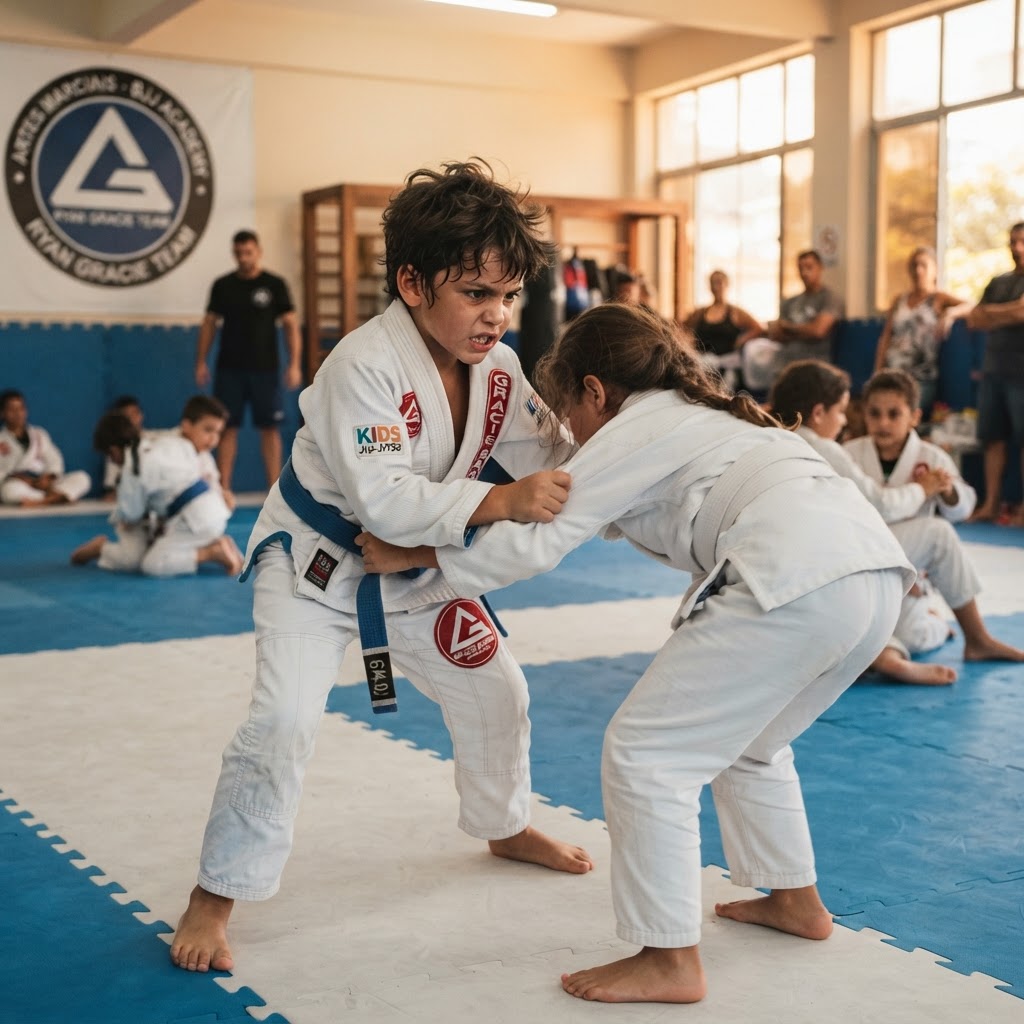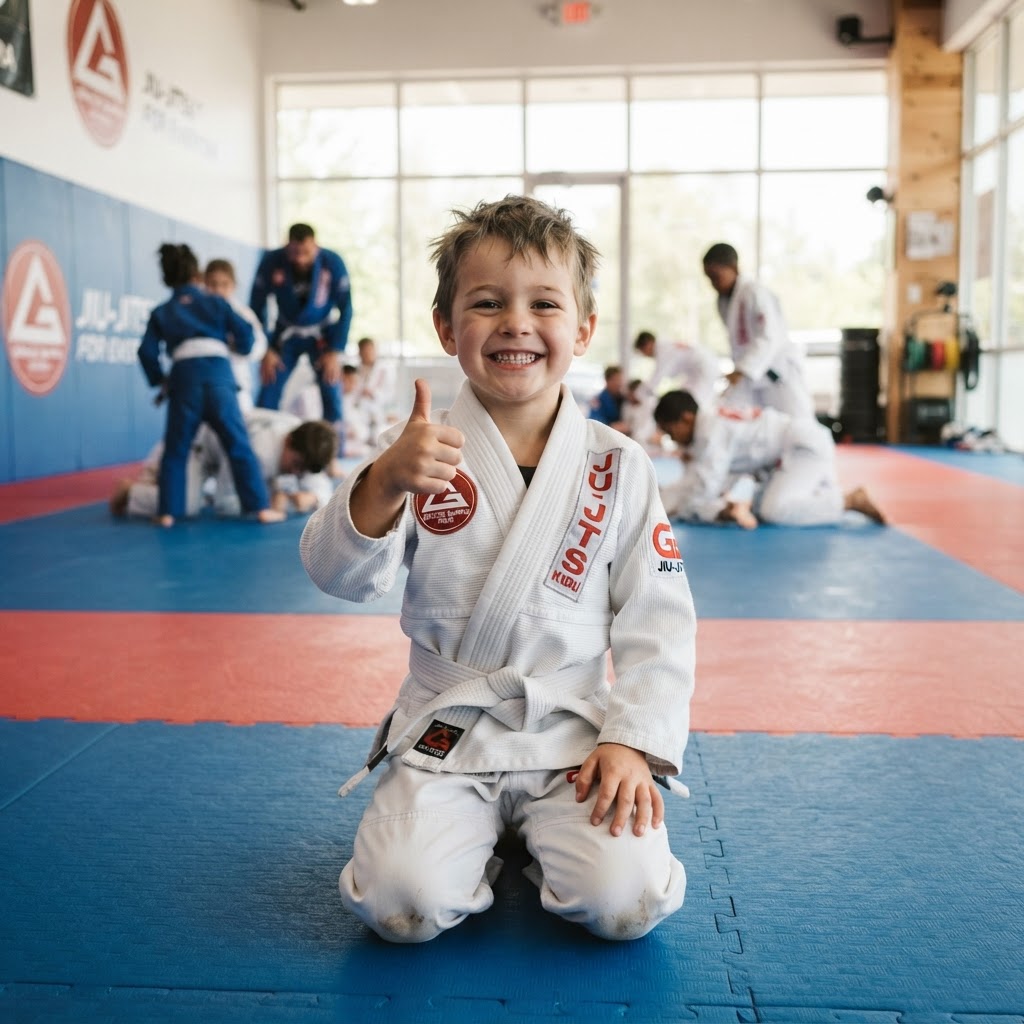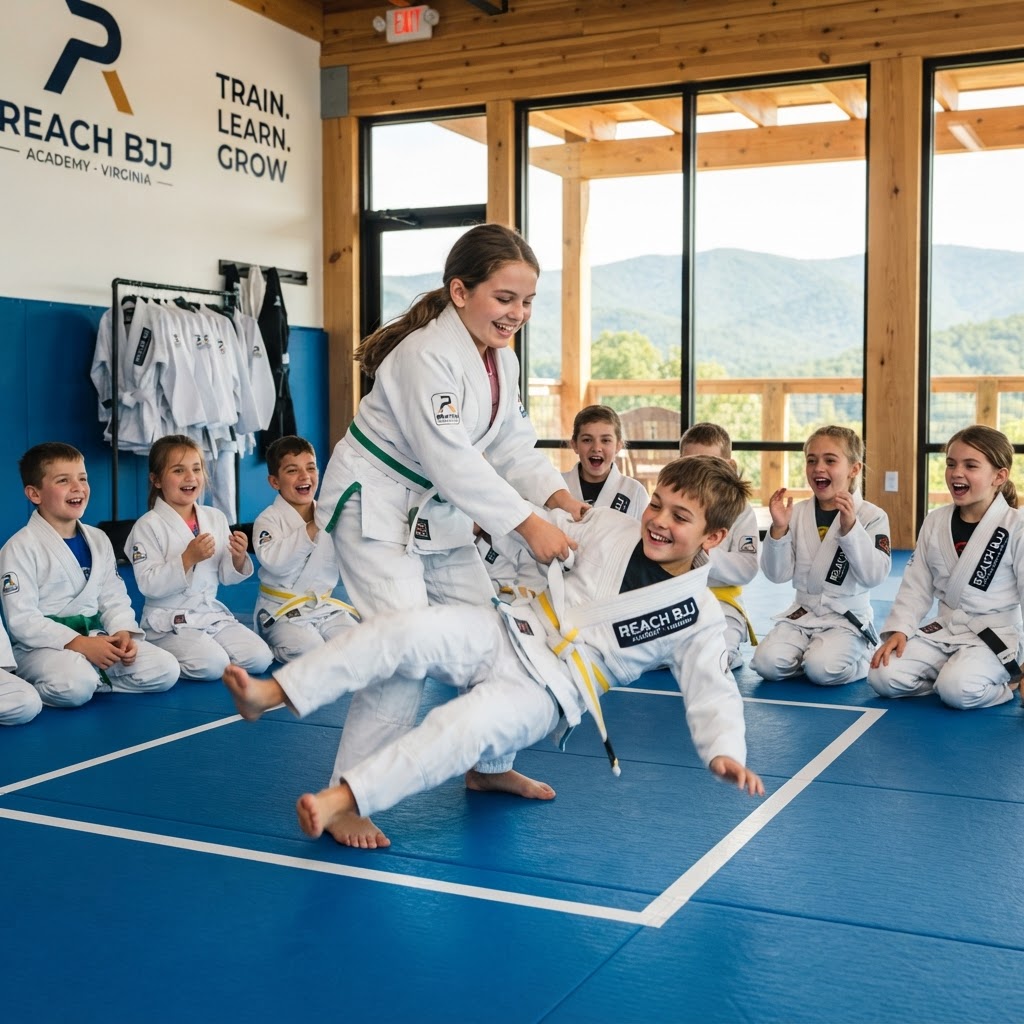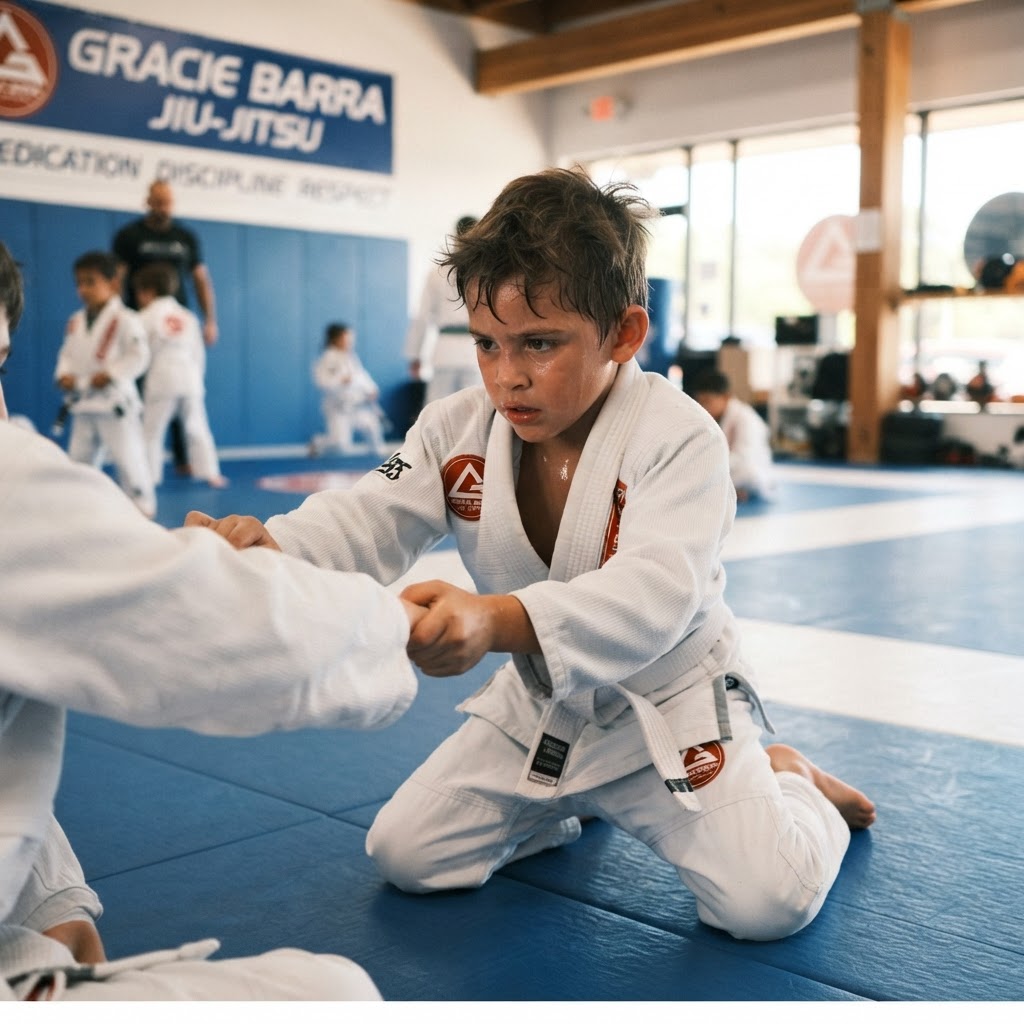
If your child struggles to sit still, pay attention in class, or finish homework without a battle, you're far from alone. Millions of parents watch their kids bounce between distractions, lose focus halfway through assignments, and struggle with the self-discipline that school demands. But what if the solution isn't another tutoring session or a stricter homework routine? What if it's a martial arts class?
Martial arts helps kids focus in ways that go far beyond what most parents expect. At Skyline Jiu-Jitsu in Waynesboro, Virginia, we've watched shy, scattered, and easily distracted kids transform into confident, attentive students both on the mat and in the classroom. Brazilian Jiu-Jitsu (BJJ) builds focus, discipline, and concentration through physical practice, and the benefits carry directly into school performance.
Why Focus Is the #1 Skill Kids Need for School Success
Classrooms demand sustained attention. A child needs to listen to instructions, block out distractions, follow multi-step directions, and stay engaged for hours at a time. For many kids, especially those with ADHD or attention challenges, that's a tall order.
Research from the National Institutes of Health shows that martial arts training enhances attentional control and executive function in children. The structured environment of a BJJ class forces kids to practice paying attention in real time, to one instructor, one technique, one partner at a time. Over weeks and months, that repetition rewires how kids approach focused tasks everywhere else in their lives, including school.
How Brazilian Jiu-Jitsu Builds Focus Differently Than Other Activities
Plenty of extracurricular activities promise to build character and discipline. But Brazilian Jiu-Jitsu does something that soccer, piano lessons, and even traditional karate often can't: it demands focus in the present moment with immediate, physical feedback.
When a child is on the mat in a BJJ class at Skyline Jiu-Jitsu, they can't let their mind wander. If they lose focus while practicing an armbar or a guard pass, their partner escapes the position. The consequence is immediate and clear. That real-time feedback loop teaches kids that focus pays off and that inattention has consequences, a lesson that transfers directly to the classroom.
Unlike team sports where a child can drift mentally during a game and let teammates pick up the slack, every moment on the BJJ mat belongs to them. They learn that their attention is a tool they control, and that using it well leads to success.
The Science: BJJ and the ADHD Brain
For parents of children with ADHD, the research on martial arts is especially encouraging. A 2025 review published in martial arts research journals confirmed what practitioners have observed for decades: martial arts training changes behavior, improves focus, and builds executive function in children with attention challenges.
The reason comes down to how BJJ engages the brain. Each class combines:
- Structured routines that provide predictability and reduce anxiety
- Physical exertion that burns off excess energy and improves impulse control
- Mindfulness elements like breathing and body awareness that calm the nervous system
- Cognitive demands like memorizing techniques and anticipating a partner's movements
Together, these elements target the exact brain systems that ADHD affects: attention regulation, impulse control, and executive function. For kids in Waynesboro, Fishersville, and Charlottesville, regular BJJ training offers a drug-free complement to other ADHD management strategies.
5 Ways Martial Arts Helps Kids Focus in School
1. Structured Attention Training
Every BJJ class follows a clear structure: warm-up, technique instruction, drilling, and sparring. Kids learn to follow a routine, listen to instructions, and transition between activities without melting down. That structure mirrors the school day, where kids move from subject to subject and need to shift their attention on cue. The more kids practice structured attention on the mat, the more natural it becomes in the classroom.
2. Goal-Setting and Delayed Gratification
In Brazilian Jiu-Jitsu, progress happens slowly. Kids earn stripes and belts over months, not minutes. They learn that showing up, paying attention, and practicing consistently leads to real results, even when the payoff isn't immediate. This is the opposite of the instant-reward culture many kids live in with screens and social media. In school, the ability to work toward a long-term goal, whether it's a good grade on a project or mastering a difficult subject, is exactly what martial arts teaches.
3. Body Awareness and Self-Regulation
BJJ teaches kids to notice how their body feels when they're frustrated, tired, or overstimulated. They learn to breathe through difficult positions and to stay calm under pressure. This self-regulation skill is powerful in the classroom. A child who can identify when their attention is slipping and take a breath to reset is far better equipped to stay on task than one who has never practiced that skill.
4. Respect for Instructions and Authority
In every BJJ class at Skyline Jiu-Jitsu, kids follow instructions from their coach, line up when asked, and listen quietly during technique demonstrations. This culture of respect and attention carries into school. Parents consistently report that their kids listen better in class, follow teacher directions more readily, and show more respect for authority after starting martial arts training.
5. Physical Energy Outlet That Improves Focus
Many kids struggle to focus simply because they have too much pent-up physical energy. Sitting still in a classroom all day without enough movement is tough for any child, especially active ones. BJJ classes give kids a structured, high-energy outlet that leaves them physically tired and mentally sharp. After a good training session, kids sleep better, sit still more easily, and bring a calmer, more focused energy to school the next day.
Real Results: What Waynesboro Parents Are Seeing
At Skyline Jiu-Jitsu, we serve families from across the Shenandoah Valley, including Waynesboro, Staunton, Fishersville, and Charlottesville. Parents bring their kids to class for all sorts of reasons, but the academic benefits are among the most consistent feedback we hear.
Parents report improvements like:
- Better ability to complete homework independently
- Improved behavior reports from teachers
- Higher confidence when trying difficult or unfamiliar tasks
- Fewer distractions and faster task completion
- Better emotional regulation when frustrated or challenged
These aren't just anecdotes. The research backs it up. A study on martial arts and cognitive control in children found measurable improvements in attention and executive function after consistent martial arts training. The evidence is strong enough that many child development specialists now recommend martial arts as a complement to traditional ADHD and attention support strategies.
READY TO TRY BRAZILIAN JIU-JITSU?
Claim a FREE trial class at Skyline Jiu-Jitsu today!
Serving Waynesboro, Charlottesville, Fishersville & the Shenandoah Valley
What to Expect From Your Child's First BJJ Class
If you're considering enrolling your child in Brazilian Jiu-Jitsu, the first class is designed to be welcoming and low-pressure. Your child will meet the coach, learn some basic movements, and participate in a fun, structured environment. You'll watch them practice listening, following instructions, and working with a partner, all while having a great time.
At Skyline Jiu-Jitsu, our kids program is built specifically for children ages 5 and up. We focus on age-appropriate techniques, safety, and most importantly, building the focus, discipline, and confidence that help kids succeed on and off the mat.
Want to learn more about our kids program? Check out our guide to kids BJJ classes and our overview of what age kids should start martial arts.
How Quickly Will You See Results?
Every child is different, but most parents notice changes within the first month of consistent training. The first improvements usually show up in behavior and self-regulation: kids listen better, follow instructions more readily, and handle frustration more calmly. Academic improvements often follow within a few months as the focus and discipline skills built on the mat start transferring to the classroom.
The key is consistency. Like any skill, focus and discipline require regular practice. Kids who train two to three times per week see the fastest and most lasting results. That's why we recommend starting with a regular schedule rather than dropping in occasionally.
Why Choose Brazilian Jiu-Jitsu Over Other Martial Arts?
Parents often ask whether BJJ is better for building focus than traditional martial arts like karate or taekwondo. The answer depends on the child, but BJJ has some unique advantages:
- More interactive: BJJ involves constant partner work, which keeps kids engaged and requires active attention
- Problem-solving focus: Each position in BJJ is a puzzle, training kids to think critically and stay mentally engaged
- Lower impact: BJJ emphasizes technique and leverage over striking, making it safer for kids while still challenging their minds
- Real-world applicability: Kids learn practical self-defense skills that build confidence, which supports better focus and emotional regulation
For a deeper comparison, read our guide on the best martial arts for kids.
Making Martial Arts Part of Your Child's School Year Routine
The start of the school year is the perfect time to enroll your child in martial arts. Here's why:
- Build good habits early: Starting BJJ in September sets a foundation of discipline and focus for the entire school year
- After-school structure: BJJ classes provide a productive after-school activity that keeps kids active and off screens
- Stress relief: School can be stressful for kids. BJJ offers a healthy physical outlet that reduces anxiety and improves mood
- Community and friendships: Your child will build relationships with peers who value discipline and hard work, reinforcing positive behavior
Read more about why fall is the ideal time to start in our post about fall activities for kids and after-school programs.
Frequently Asked Questions
At what age should my child start Brazilian Jiu-Jitsu?
Most kids can start BJJ around age 5. At that age, classes focus on basic movements, body awareness, and following instructions rather than complex techniques. Read our detailed age guide here.
Will BJJ help my child with ADHD?
Research strongly suggests that martial arts training improves attention, impulse control, and executive function in children with ADHD. BJJ's combination of physical activity, structured routine, and mindfulness elements makes it particularly effective. However, BJJ should complement, not replace, any professional treatment plan your child's doctor recommends.
How often should my child train for the best results?
For focus and behavioral improvements, two to three classes per week is ideal. Consistency matters more than intensity, especially in the first few months as your child builds the habit.
Is BJJ safe for kids?
Yes. Kids BJJ programs are designed with safety as the top priority. Classes use age-appropriate techniques, supervised sparring, and a controlled environment. BJJ emphasizes technique and leverage, not striking, which reduces the risk of head injuries common in other martial arts.
Start Building Your Child's Focus Today
If your child is struggling with focus, discipline, or confidence in school, Brazilian Jiu-Jitsu offers a proven, fun, and structured path to improvement. The skills kids learn on the mat, attention, perseverance, self-control, and respect, are the same skills they need in the classroom.
At Skyline Jiu-Jitsu in Waynesboro, Virginia, we've helped hundreds of kids across the Shenandoah Valley build the focus and confidence they need to succeed. Our experienced coaches create a positive, supportive environment where kids learn, grow, and have a blast doing it.
Don't wait for another difficult semester. Give your child the tools to thrive in school and beyond. Claim your free trial class and watch the transformation begin.
Related Posts You Might Enjoy
- What Age Should Kids Start Martial Arts? A Parent's Guide
- The Best Martial Arts for Kids: Why BJJ Stands Above the Rest
- Kids Self-Defense Classes: How BJJ Helps Children Stay Safe and Confident
- Why Martial Arts for Kids Is the Best Extracurricular Activity
- How Jiu Jitsu Builds Confidence: The Science-Backed Guide
READY TO TRY BRAZILIAN JIU-JITSU?
Claim a FREE trial class at Skyline Jiu-Jitsu today!
Serving Waynesboro, Charlottesville, Fishersville & the Shenandoah Valley